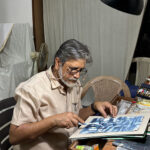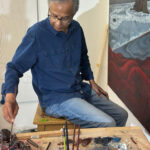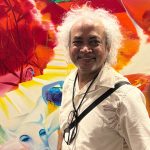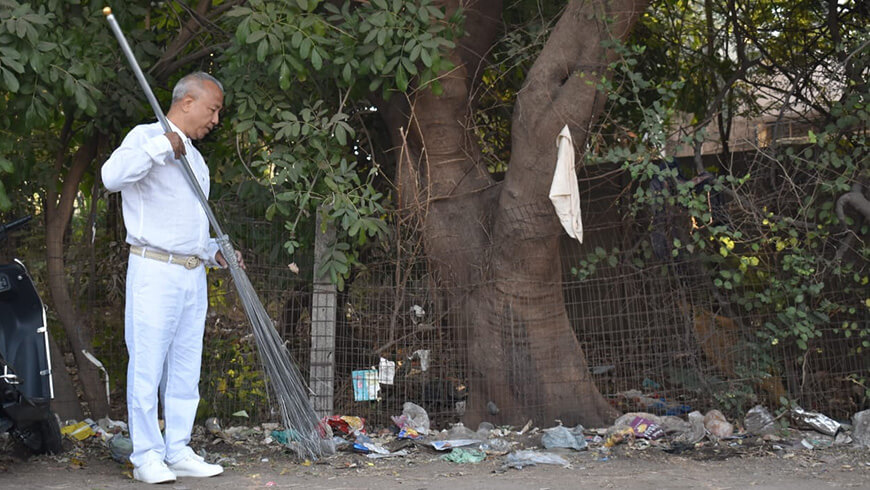
Ganesh Gohain was born on 26th July 1966, in Khonsa, Arunachal Pradesh, is an Eminent Contemporary Indian artist whose practice explores abstraction, materiality, and layered perceptions of space. His Sculptures, Paintings and mixed-media works merge intuitive mark-making with conceptual inquiry, reflecting on themes of memory, displacement, and identity.
He received his Bachelor of Fine Arts (Sculpture) from the Government College of Art and Crafts, Guwahati, Assam, and completed his Post Diploma in Sculpture (First Class First with Distinction) from the Faculty of Fine Arts, M.S. University, Baroda – one of India’s leading art institutions.
In 1998 – 1999, he was awarded a French Government Grant and invited to study at École Supérieure des Beaux-Arts, Le Mans, France. In 2002, he received the Charles Wallace Trust Award for an Artist Residency at Berllanderi Sculpture Workshop, Wales, and in 2003 he was invited as a Visiting Artist in Residence at the Glasgow School of Art, Glasgow, U.K. These experiences in France and the United Kingdom significantly broadened his artistic perspective and deepened his engagement with contemporary discourses on abstraction.
Gohain has participated in numerous artist residencies, including at the Glasgow School of Art and other international programs, which have continuously informed his evolving visual language and material sensibilities.
His works have been widely exhibited across India and abroad, through solo and group exhibitions at leading galleries and cultural institutions. He has also taken part in major art events, contributing meaningfully to the discourse on Indian abstraction within the context of global contemporary art.
Gohain has received several state and national-level awards and continues to be a vital presence in India’s contemporary art scenarios. His art – rooted in the sensibilities of his origin yet shaped by global experiences – creates a contemplative space that resists fixed interpretations while inviting multiple layers of meaning.
He currently lives and works in Vadodara, Gujarat.
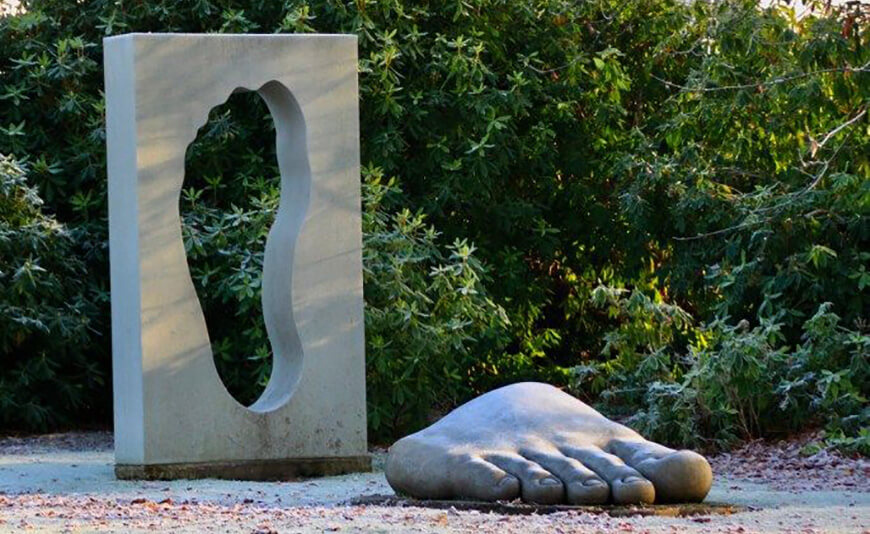
Harshad Padiya: Could you share a bit about your early life in Assam and how it shaped your artistic journey?
Ganesh Gohain: It is not easy to describe my early life briefly, but I will try to make it precise.
My childhood was shaped by the elements of nature – soil, water, air, fire, and sky. I was a village child, and I spent my days immersed in the natural world. I was born in a place surrounded by the Himalayan ranges, and from an early age I became familiar with rivers such as the Brahmaputra, Siyang, Bhogdoi, Dikhou, Dihing, Namdang, and many others.
The hills, mountains, forests, and vast landscapes of Assam filled my imagination. Their beauty and presence are difficult to express in words. These memories remain with me as vivid visual experiences, like scenes from a film, returning to me from time to time and inspiring me in many ways throughout my life.
Nature has been one of the greatest influences on my artistic journey. It nurtured within me a sense of monumentality, while my understanding of abstraction and the philosophy of life began to develop from those early childhood experiences. Even today, those memories continue to guide and inspire my work.
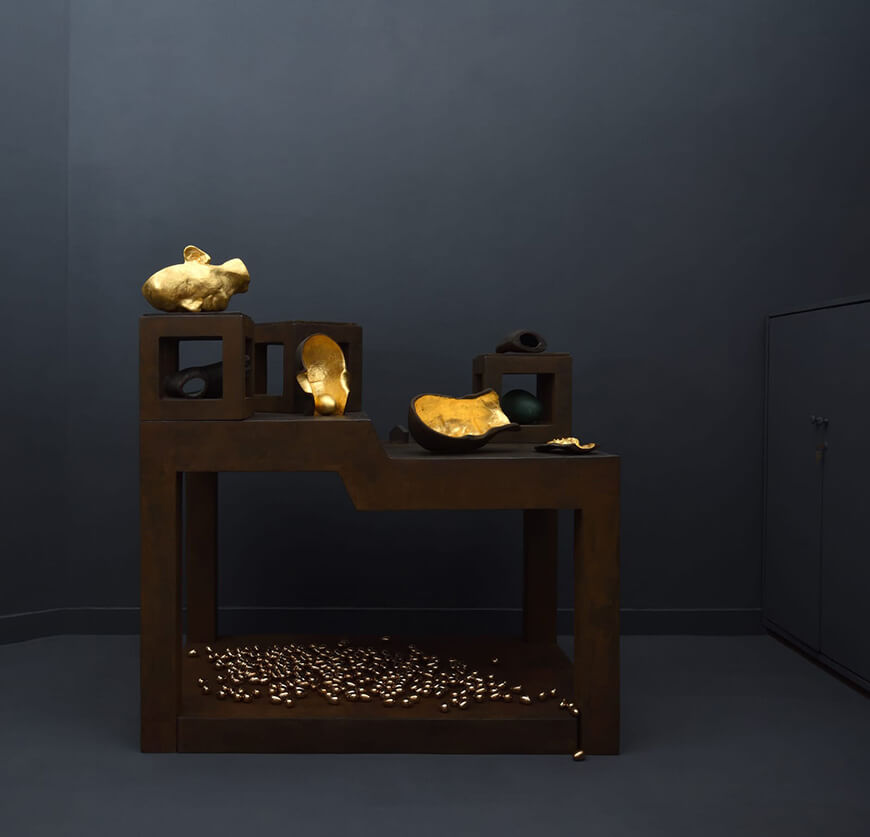
HP: What drew you towards fine arts and what role did your education at M.S. University, Baroda play in your growth?
GG: My family comes from an engineering background. My father was a CPWD engineer in Arunachal Pradesh. My mother had the opportunity to study at Santiniketan, but unfortunately she could not pursue it. However, she became my first teacher. When I was a child, she taught me the basics of drawing and shared many stories with me. Her influence was deeply inspiring and played an important role in shaping my imagination.
Initially, I was a B.Sc. student with Mathematics Honours, but my mind was always drawn elsewhere. During those years, I was fascinated by castles, historical sites, temples, and cultural heritage. Gradually, I realized that art was not merely an interest but something I wanted to pursue as a profession.
I then joined the Government College of Art and Crafts, Guwahati, where I completed my Bachelor of Fine Arts in Sculpture. While my undergraduate education provided me with a foundation, I felt the need to deepen both my philosophical understanding and technical knowledge of art. This led me to the Faculty of Fine Arts at Maharaja Sayajirao University, Vadodara, one of the most respected institutions for art education in India.
The years I spent at M.S. University were transformative. The Faculty of Fine Arts, the city of Vadodara, and the cultural environment of Gujarat played a profound role in shaping me as an artist and as a person. In one of my earlier interviews, I said that if Assam is my Devaki, then Gujarat is my Yashoda. Assam gave me birth, but Gujarat nurtured and shaped me. That metaphor still expresses my feelings most accurately.
When I reflect on the role of my education at M.S. University, I feel that I was moulded by the Faculty, by Vadodara, and by the combined influences of both Assam and Gujarat. It was more than an institution for me, it was my Gurukul.
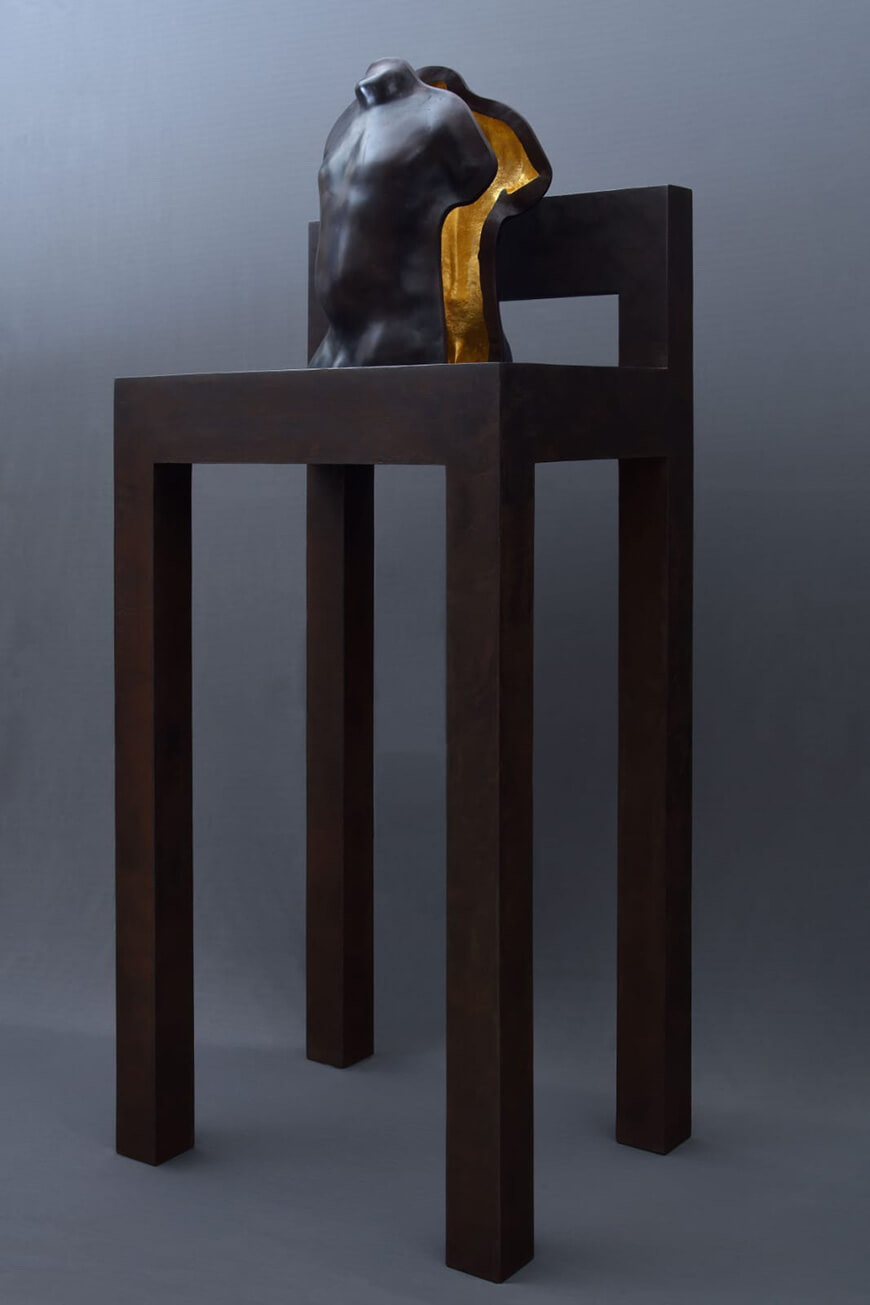
HP: Your works often engage with abstraction, materiality and layered meanings. How would you describe your visual language?
GG: At a deeper level, I consider myself an abstract artist. Once I said, “When I look into a mirror, I see abstraction.” For me, abstraction is not merely a visual style; it is a way of perceiving existence. Every image carries its own essence, and according to that image, I imagine which material would best express its character within my visual language.
I have also said, “Life exists when shadow exists; when shadow exists, life exists.” This idea reflects my understanding of the relationship between presence and absence, the visible and the invisible. These dualities often inform my work.
Indian life is filled with abstraction if we observe it deeply, from morning until night. Although India is a densely populated country where figurative imagery often dominates the visual landscape, I still see a profound abstraction beneath the surface. It exists in our history, rituals, philosophies, symbols, and everyday experiences.
I am inspired by the countless stories, materials, traditions, and the vast distances and layers of the earth itself. All of these elements contribute to my artistic thinking. It is difficult to explain this entirely through words. Visual forms can express what language often cannot, and my work is an attempt to explore and communicate those deeper layers of meaning.
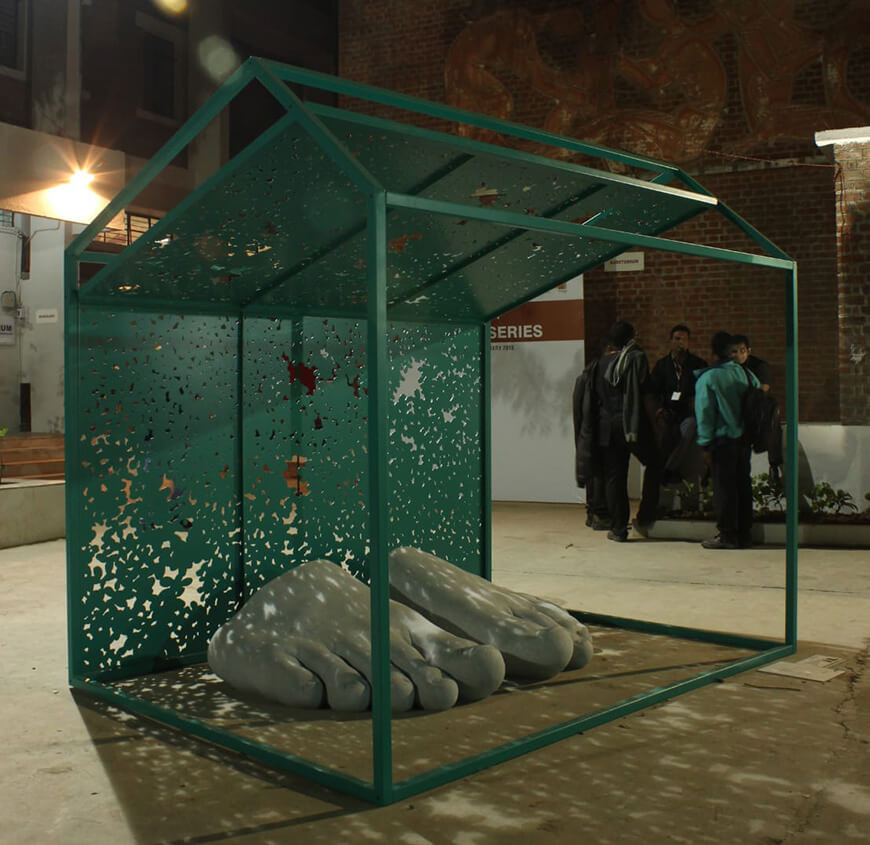
HP: How do you approach your choice of mediums—paper, canvas, pigments or mixed materials?
GG: My choice of medium depends on the image or idea that arrives in my mind. The first step is always to understand its nature and discover the most appropriate visual language through which it can be expressed. Once that process begins, the material often reveals itself.
I do not start with a fixed preference for paper, canvas, pigments, or any particular medium. Instead, I choose materials according to the demands of the image and the experience I wish to create. Each material carries its own character, energy, and possibilities, and I try to work with those qualities rather than against them.
For me, the medium is not separate from the idea. The process of selecting and exploring materials becomes a way of expanding and realizing my imagination. Through this dialogue between image, material, and intuition, the work gradually takes its form.
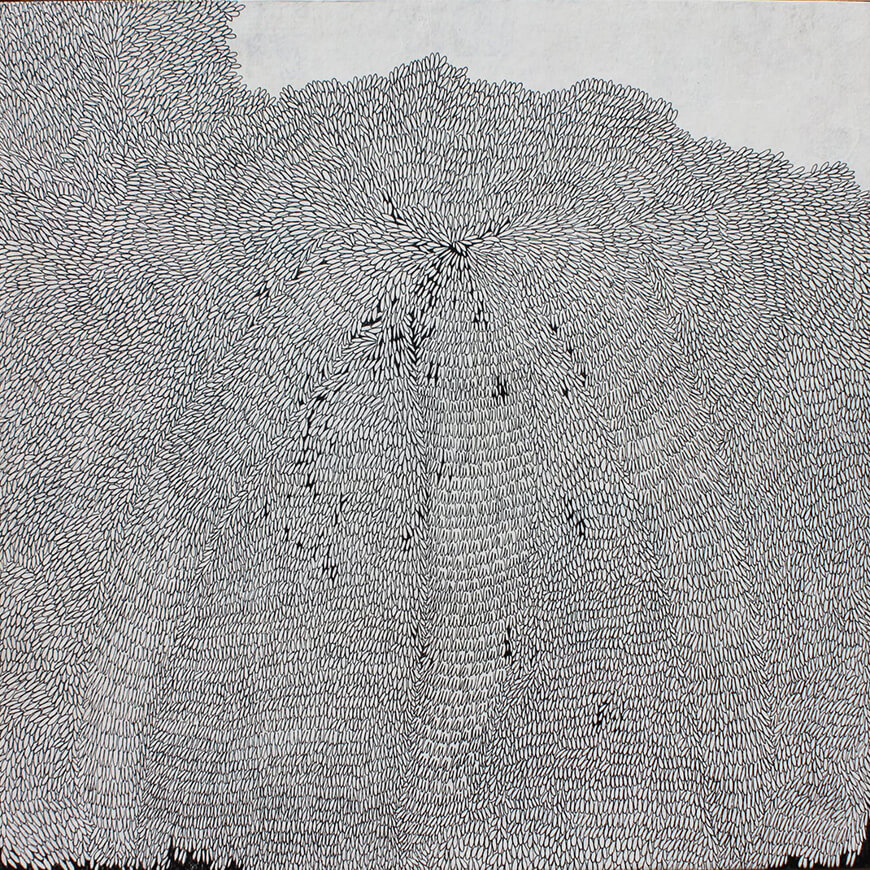
HP: How important is “process” in your art—do you plan in advance or let the work evolve intuitively?
GG: Process is very important in my artistic practice. Earlier, during my Bachelor’s and even my Master’s studies, I worked with more planning and structure, perhaps because of my training as a sculptor. There was usually a clear idea or direction before beginning a work.
Today, my approach is quite different. My art practice has become closely connected to the process of life itself. I see each work as an unknown journey. We begin with a sheet of paper, a canvas, or a piece of clay, but we do not always know where the journey will lead.
As the work unfolds, it teaches us. Each stage reveals new possibilities, new questions, and new understandings. In that sense, the process is not separate from the artwork, it is the artwork. The journey itself becomes the teacher, and through that experience the work gradually finds its own form and meaning.
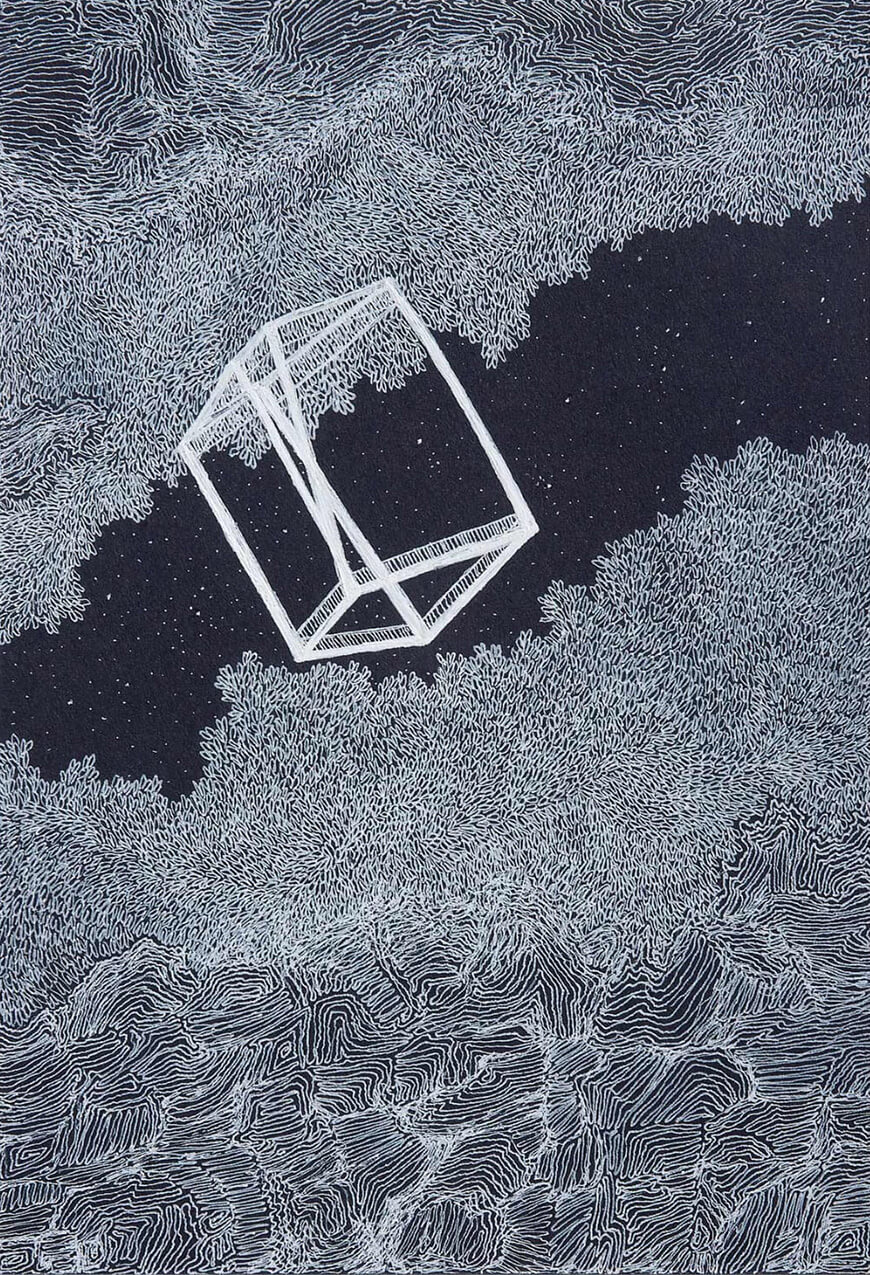
HP: Much of your work touches upon migration, displacement and impermanence. How have your personal experiences influenced these themes?
GG: I would not say that these themes come directly from my personal experiences alone. Rather, our thoughts and artistic expressions are shaped by the circumstances and experiences we encounter throughout life.
Wherever we are in the world, we are constantly observing, feeling, and absorbing our surroundings. These experiences, whether personal or collective, influence the way we think and create. Themes such as migration, displacement, and impermanence are part of the human condition, and in one way or another they touch all of us.
Perhaps these ideas find their way into my work through this ongoing engagement with life and the world around me. As artists, we are continuously inspired by the experiences, histories, and realities that surround us, and these influences often emerge naturally in our creative process.
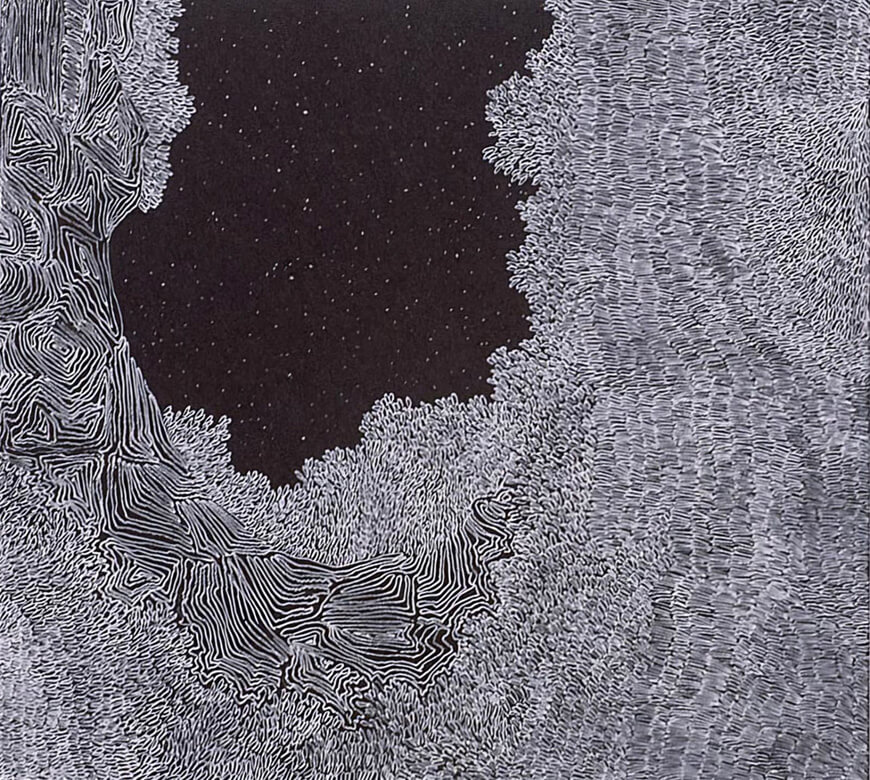
HP: Do your Assamese roots find resonance in your art, even when you are working outside that context?
GG: Yes, roots are always important. Whether we consciously seek them or not, they naturally find their way into our thoughts and creative expressions, especially if we are sensitive and aware of our existence, our time, and the space we inhabit.
Being rooted also means understanding our relationship with the place that has shaped us and recognizing our responsibility towards it. As a son of that soil, I carry those memories, experiences, and cultural influences with me wherever I go. They continue to inform my way of seeing and understanding the world.
At the same time, I do not see identity as something fixed or confined by geography. The earth is round, and we are all connected in many ways. While my Assamese roots remain an essential part of who I am, they coexist with the experiences, encounters, and learnings I have gathered from other places and cultures. This dialogue between roots and journeys naturally resonates within my art.
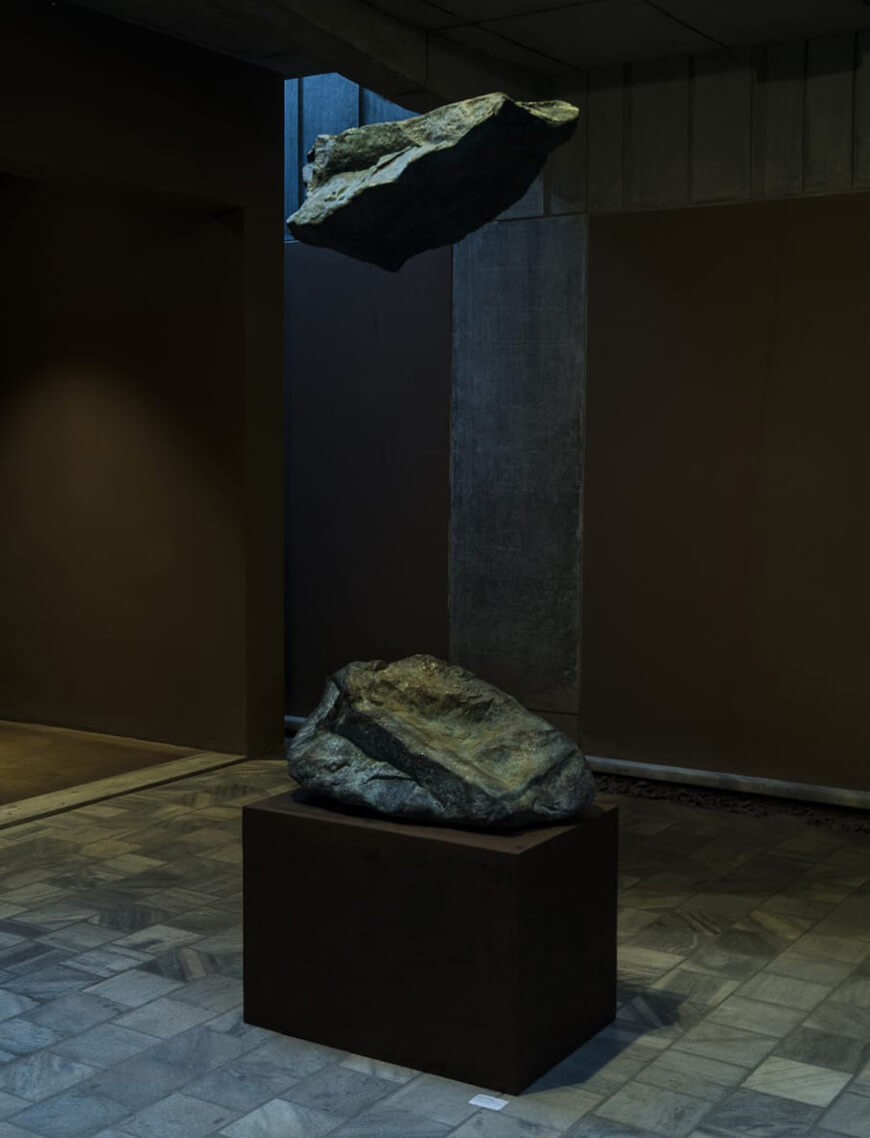
HP: Many Indian contemporary artists draw from mythology, spirituality or philosophy. Do these play a role in your own practice?
GG: Yes, mythology, spirituality, and philosophy certainly play a role in my thinking, and I have great respect for these traditions. However, I also believe that every individual is different, and therefore each artist’s creative process will be different as well.
I believe in being fully aware of the time in which I exist. I try to understand the past, remain conscious of the present, and reflect on the future. These different dimensions of time continuously influence my way of thinking and creating.
Many Indian artists have inspired me throughout my journey, and I am grateful for their contributions. At the same time, I feel that inspiration is everywhere. Everything has the potential to inspire my artistic practice – nature, people, history, rituals, materials, experiences, and everyday life itself.
Ultimately, it depends on how we see, observe, and realize the world around us. For me, art begins with that process of awareness and realization. The deeper we look, the more meaning we discover.
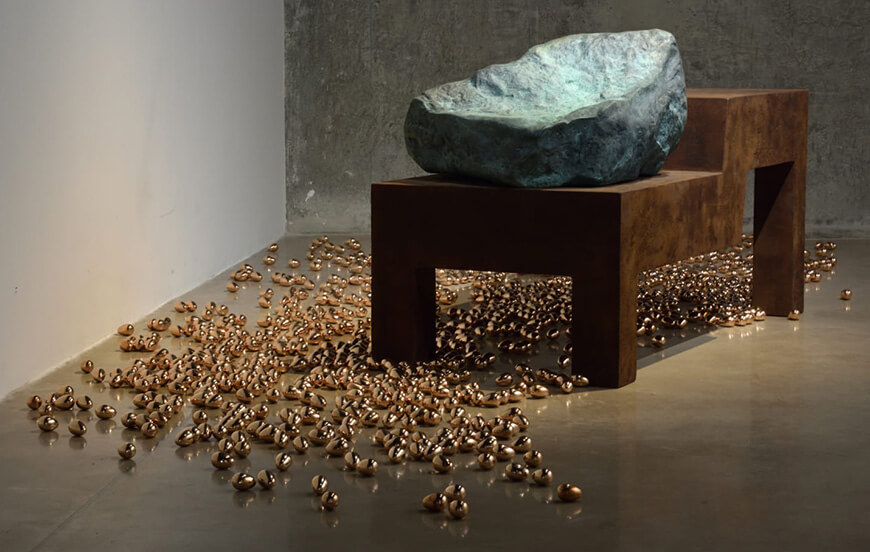
HP: How do you see abstraction functioning today—in a world increasingly demanding direct political or social commentary?
GG: Of course, I am aware of the political, social, and cultural realities of our time, and these concerns are present in my consciousness. In many ways, they influence the form and direction of my work. However, rather than responding through direct commentary, I tend to transform what I experience into another visual language.
I am interested not only in what I see with my eyes, but also in what lies beneath the visible. What I observe is absorbed, digested, and transformed within me before it re-emerges in a different form. My attempt is to make visible what is often invisible.
In today’s world, many things that once belonged to the inner space of human experience have moved into the outer world. If we imagine reversing that movement, turning the outer space back into the inner space, it begins to enter the realm of abstraction. In this sense, abstraction becomes a way of understanding and reflecting upon reality rather than escaping from it.
When we look at the journey of humankind, from primitive times to the present, the transformations are astonishing. The scale of change is almost beyond words. For me, abstraction offers a way to engage with this extraordinary journey – its complexities, contradictions, mysteries, and possibilities – in a manner that goes beyond literal description.
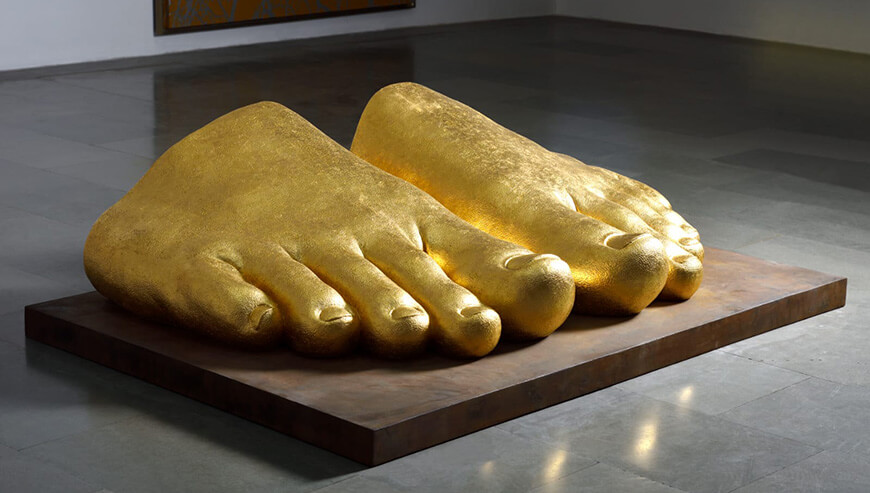
HP: Looking back, how do you think your work has evolved over the years?
GG: When I look back at my work, I can see that it has evolved continuously over the years. In some ways, the changes reflect the broader journey of human development – from the primitive to the modern. Just as humanity has undergone immense transformations through time, my artistic practice has also changed through experience, learning, observation, and reflection.
If I revisit my earlier works, I can clearly see these shifts. The forms, materials, concerns, and ways of thinking have gradually evolved. Some changes are visible, while others are more subtle and exist beneath the surface.
At the same time, I feel that certain fundamental questions and sensibilities have remained constant throughout my journey. The evolution is not a departure from where I began, but rather a continuous process of growth and discovery. Each phase of my work reflects the time, experiences, and understanding I had at that particular moment, and together they form an ongoing journey of exploration.
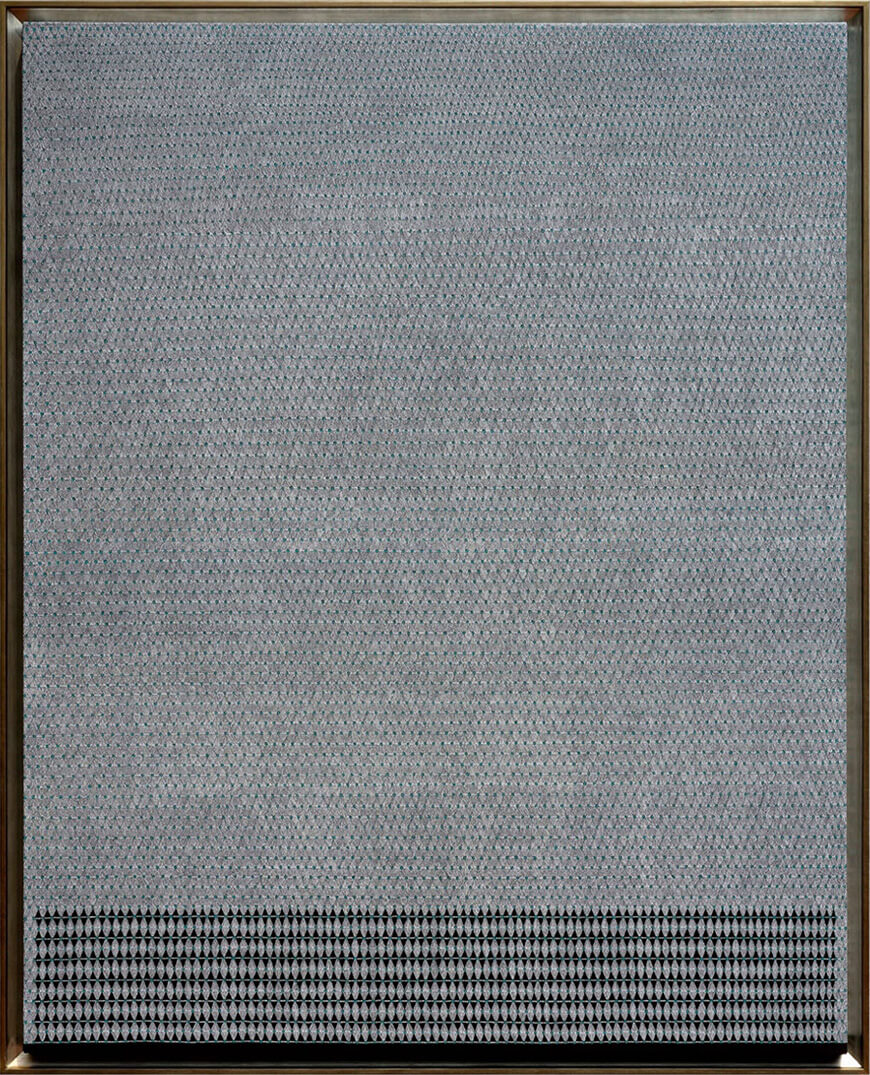
HP: What do you think about the current Indian contemporary art scene?
GG: I find the current Indian contemporary art scene both inspiring and thought-provoking. If we look back at the contributions of our masters and compare them with the present, we can see tremendous changes in terms of ideas, materials, approaches, and artistic freedom.
At times, certain works make me question why they were created, and I think that is also an important aspect of art. Art should provoke reflection and encourage dialogue. At the same time, there are many works that deeply inspire me, giving me the energy to think, create, and reflect on my own responsibilities as an Indian artist.
I am particularly encouraged by many younger artists who are highly aware of their surroundings and are exploring innovative ways of expression. Their experimentation and fresh perspectives contribute significantly to the vitality of the contemporary art scene.
For me, learning never stops. I continue to learn from all forms of artistic creation – past and present. Every sincere work has something to teach us, and I remain open to that continuous process of learning and discovery.
HP: What challenges do you think younger artists face today, compared to when you started?
GG: That is a difficult question because I do not consider myself a senior artist. In many ways, I still see myself as a young artist who is continuously learning and exploring. Of course, I have gathered some experiences over the years, but even those experiences are always evolving.
Today, young artists have access to far more possibilities than we did when we started. There are countless sources of information, technologies, materials, platforms, and opportunities available to them. How they engage with these possibilities depends on how they observe, think, and respond to the world around them.
At the same time, having so many options can sometimes be confusing. It can be difficult to decide which direction to follow. But I do not necessarily see this as a disadvantage. It is also an opportunity to explore a much wider range of experiences and ideas than was possible in our earlier years.
I feel fortunate for what my generation received, but today’s young artists have access to an even broader world of knowledge and experience. Any sensitive and committed artist can find inspiration, learning, and direction from these resources.
In many ways, I find younger artists remarkably aware, intelligent, and innovative. If I compare them with us at the same stage of our journey, I think many of them are exceptionally talented and equipped with opportunities that can lead to exciting new possibilities in art.
HP: If you were to describe your practice in three words, what would they be?
GG: Time, Space, and Existence.
HP: Finally, what advice would you give to emerging artists who are trying to find their voice?
GG: Giving advice to artists is quite difficult because art is ultimately a personal journey. Each artist must find their own path through their relationship with time, space, and existence. It is a process of self-discovery that cannot be prescribed by others.
I believe it is important to remain aware – aware of oneself, one’s surroundings, and one’s responsibilities towards existence. This awareness helps us develop a deeper understanding of who we are and what we wish to express through our work.
For me, creativity is something spiritual, a form of energy that cannot be fully defined in words. I do not believe that we can simply decide to create something at will. Rather, creative energy comes to us in mysterious ways. We often do not know where it originates or how it arrives, but when we are receptive, it finds its way through us.
If I were to offer any advice, it would be to keep your eyes open. Observe carefully. Be attentive to the energies, experiences, people, and events around you. Stay curious and sensitive to life.
At the same time, I believe we should remain humble. We should not become proud of what we create, because creativity is not something we entirely own. In many ways, art happens through us rather than being produced solely by us. The artist becomes a medium through which ideas, experiences, and energies find expression.
Once I said, “I am a liar searching for the truth.“