Introduction
The medieval period in Indian art history, spanning roughly from the 8th to the 18th centuries, is one of profound transformation. It was a time when dynasties, religions, and cultural exchanges left behind not only monuments of stone and bronze but also intangible expressions of humanity, spirituality, and collective identity. From the intricately carved temples of Khajuraho to the luminous manuscripts of Mughal ateliers, medieval Indian art captured the essence of human existence and its relationship with the divine.
Sacred Art and Human Aspiration
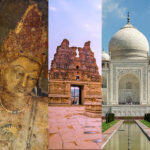
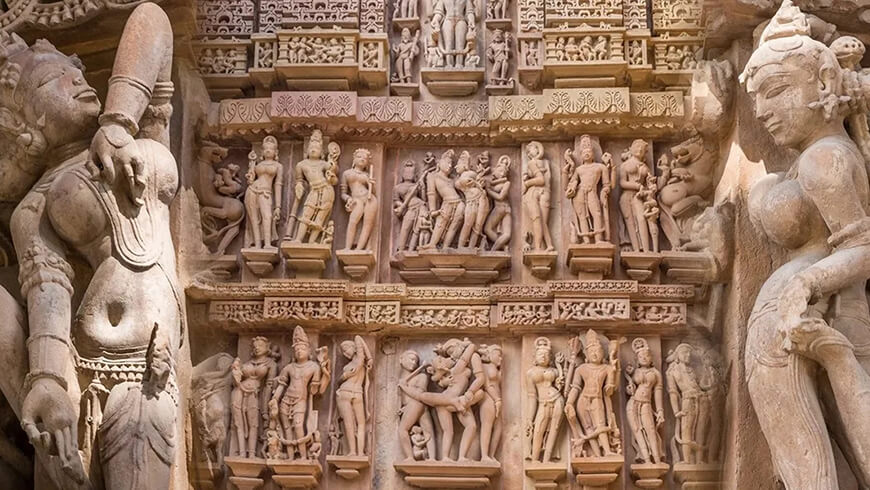
One of the most striking aspects of medieval Indian art is its religious architecture. Temples and mosques served as epicenters of not only devotion but also artistic expression. The sculptures at Khajuraho (10th–12th centuries) present not just deities but human figures in their most intimate and expressive forms, suggesting that divinity and humanity are intertwined. These depictions symbolize the spiritual journey of mankind, where desire, love, and union are seen as paths to higher consciousness.
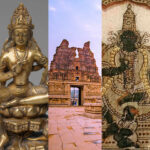
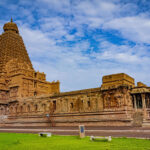
Similarly, the grand temples of the Cholas in Tamil Nadu, particularly the Brihadeeswarar Temple at Thanjavur, reflect a monumental vision of cosmic order. The bronze sculptures of Nataraja embody the cycle of creation and destruction, reminding humanity of its place within the eternal rhythm of life.
Art as a Reflection of Power and Pluralism
Medieval Indian art was not only spiritual but also political. The Delhi Sultanate and later the Mughal Empire introduced new aesthetics—arches, domes, minarets, and delicate geometric ornamentation—that expanded the vocabulary of Indian art. Mughal miniature paintings, blending Persian refinement with Indian naturalism, captured not just royal grandeur but also everyday life: musicians, lovers in gardens, or Sufi mystics in meditation. These works humanized rulers and courtiers, presenting them not as distant figures but as part of a living, breathing world.
Humanity in Everyday Expression
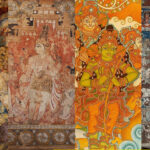
While temples and palaces reflected grandeur, medieval Indian art also thrived in the vernacular. Local craft traditions, textiles, and folk paintings carried forward stories of devotion, morality, and social life. Pahari paintings of the Himalayan hills illustrated themes from poetry and folklore, where Radha and Krishna’s love symbolized the eternal human longing for the divine. Such artworks celebrated human emotion as a valid, even sacred, part of existence.
Philosophical and Ethical Underpinnings
A key feature of medieval Indian art was its rootedness in philosophical systems such as Bhakti and Sufism. Both movements emphasized love, compassion, and the direct connection between the human and the divine. Bhakti poets like Mirabai and Tulsidas inspired artistic representations that blurred the boundaries between the sacred and the human. Sufi shrines, with their calligraphy and ornamentation, reflected the idea of unity and the humanity of all people before God.
Legacy and Human Relevance
What makes medieval Indian art enduring is its approach towards humanity. By representing not only gods and kings but also ordinary individuals, emotions, and daily life, the art of this period created a visual dialogue between the eternal and the temporal. It emphasized that human experiences—whether love, suffering, joy, or devotion—are integral to understanding the cosmos.
In today’s world, medieval Indian art serves as a reminder that creativity is not merely about aesthetics, but about embodying values of compassion, inclusivity, and shared identity. It teaches us that art can humanize power, spiritualize desire, and eternalize fleeting human moments.