Temple architecture in India represents one of the most profound transformations in the history of sacred space. From small, modest shrines in the Gupta period to the grand Dravidian complexes of the Cholas, the evolution of temple design is deeply intertwined with religious ideas, ritual practices, political authority, and regional identity. Between the 4th and 13th centuries CE, India witnessed remarkable innovation in architectural technology, iconographic programs, and the very concept of what a “temple” should be. This period not only shaped the landscape of ancient India but also laid the foundation for the architectural culture of South and Southeast Asia.
Gupta Period (4th–6th Century CE): The First Language of Temple Architecture
The Gupta era is often called the “Classical Age of Indian Art” due to its clarity of form, harmony of proportion, and spiritual elegance. During this time, the idea of the temple matured from simple outdoor shrines into structured sacred spaces with defined architectural elements.
Key Features of Gupta Temples
- Square sanctum (garbhagriha): The cosmic womb housing the deity.
- Flat or slightly curved roof: Shallow beginnings of the future shikhara.
- Plain exterior walls: Focus on interior sanctity rather than outward ornamentation.
- Introduction of mandapa: The pillared hall for congregational worship.
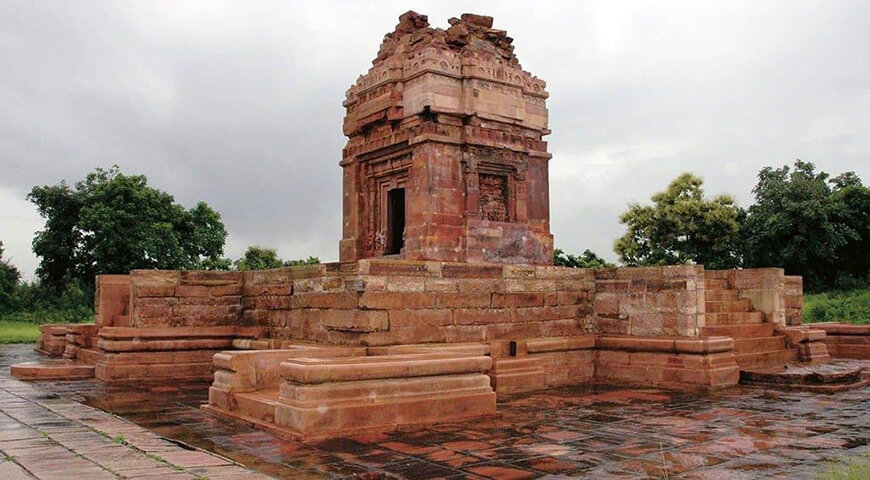
Examples such as Temple No. 17 at Sanchi, Dashavatara Temple at Deogarh, and Parvati Temple at Nachna show early experimentation with the shikhara and elaborate doorways. The Gupta architects created a canon—proportions, iconography, and ritual pathways—that later dynasties expanded dramatically.
More importantly, the temple became a microcosm of the universe, following Vastu Shastra principles. Sacred geometry, axial plans, and symbolic measurements defined the divine experience.
Post-Gupta Transformations: Pallava, Chalukya, and Early Experiments
Between the 6th and 8th centuries, several regional powers advanced the architectural vocabulary.
Pallavas (South India)
The Pallavas pioneered some of the most iconic architectural experiments:
- Rock-cut temples at Mamallapuram
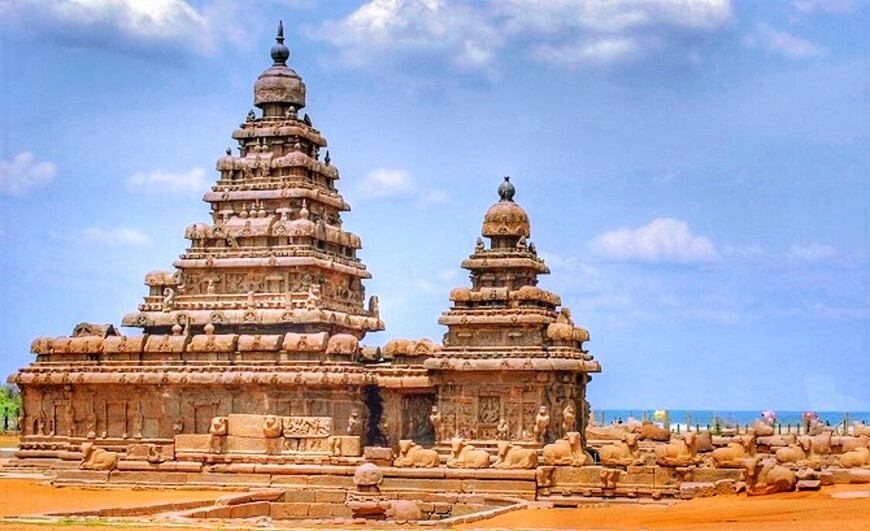
- Structural temples like the Shore Temple
- Carved monolithic rathas representing evolving temple typologies
This period introduced multi-storeyed vimanas and complex sculptural programs illustrating myths, royal patronage, and spiritual narratives.
Chalukyas (Deccan)
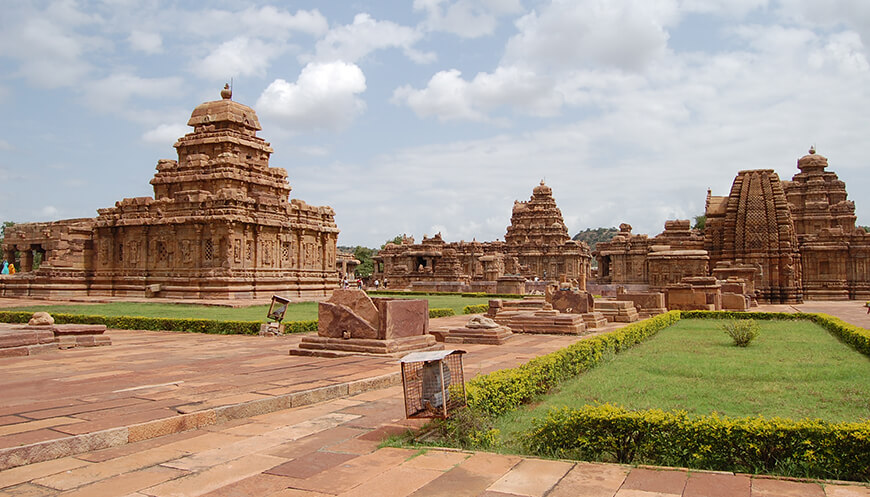
Temples at Aihole, Pattadakal, and Badami served as a laboratory of Indian architecture. The Chalukyas blended northern Nagara and southern Dravidian styles, producing hybrid forms:
- Curvilinear shikharas
- Dravidian tiered vimanas
- Highly ornamented pillars and ceilings
By this time, temples were no longer modest shrines but monumental sacred landscapes integrated into social life.
Nagara and Dravidian Styles: Two Great Currents
By the 8th century, temple architecture solidified into two major stylistic streams.
Nagara (North Indian) Style
- Curvilinear shikhara
- Square sanctum with projections
- Large mandapas
- Emphasis on verticality
The temple became a soaring cosmic axis, connecting earth and heaven.
Dravidian (South Indian) Style
- Pyramidal vimana above the sanctum
- Large temple walls and courtyards
- Gopurams (gateway towers) emerging late
- Emphasis on horizontal expansion and enclosure
These two styles coexisted, exchanged ideas, and developed distinct identities.
Chola Period (9th–13th Century CE): The Zenith of Sacred Architecture
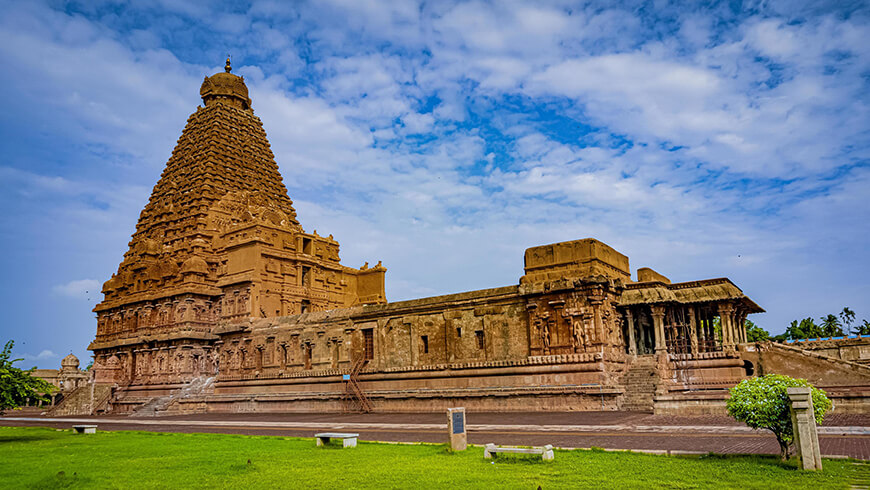
The Chola dynasty transformed temple-building into an imperial statement. Temples were not simply places of devotion—they were administrative centers, cultural hubs, and symbols of political supremacy.
Key Features of Chola Temples
- Massive, multi-tiered vimanas
- Axis-aligned courtyards and subsidiary shrines
- Extensive mandapa complexes
- Elaborate stone and bronze iconography
The Brihadeeswara Temple (Thanjavur) built by Rajaraja Chola I stands as the monumental apex of medieval temple architecture. Its 216-foot vimana remains one of the tallest in the world, constructed with engineering expertise that still puzzles modern architects.
Chola temples introduced:
- Precision carving on granite
- Bronze casting (lost-wax technique)
- Temple administration via land grants and inscriptions
In Chola society, temples served multiple functions:
- Religious
- Economic
- Cultural
- Social
Dancers, musicians, scholars, artisans, and priests all participated in the temple ecosystem, making it the heart of urban and rural life.
Evolution of the Sacred Space
Between the Gupta and Chola periods, the idea of sacred space evolved remarkably:
1. From Single Shrines to Temple Cities
Gupta temples were self-contained structures. Chola temples became vast complexes with multiple shrines, mandapas, tanks, cloisters, and towering gateways.
2. From Modest Roofs to Giant Shikharas and Vimanas
Architectural scale became a form of spiritual and political expression.
3. From Local Patronage to Imperial Monumentality
Temples became dynastic markers—symbols of power, identity, and cultural pride.
4. From Symbolic Geometry to Urban Planning
Temples defined entire settlements and economic networks.
The journey from the Gupta to the Chola period represents one of the most extraordinary evolutions in world architectural history. What began as a simple sanctum blossomed into complex sacred cities filled with towering vimanas, intricate sculpture, and a thriving cultural ecosystem. These temples remain living testaments to the creativity, devotion, engineering genius, and socio-political sophistication of ancient India.
Understanding this evolution allows us to see the temple not merely as a religious structure, but as the beating heart of Indian civilization.