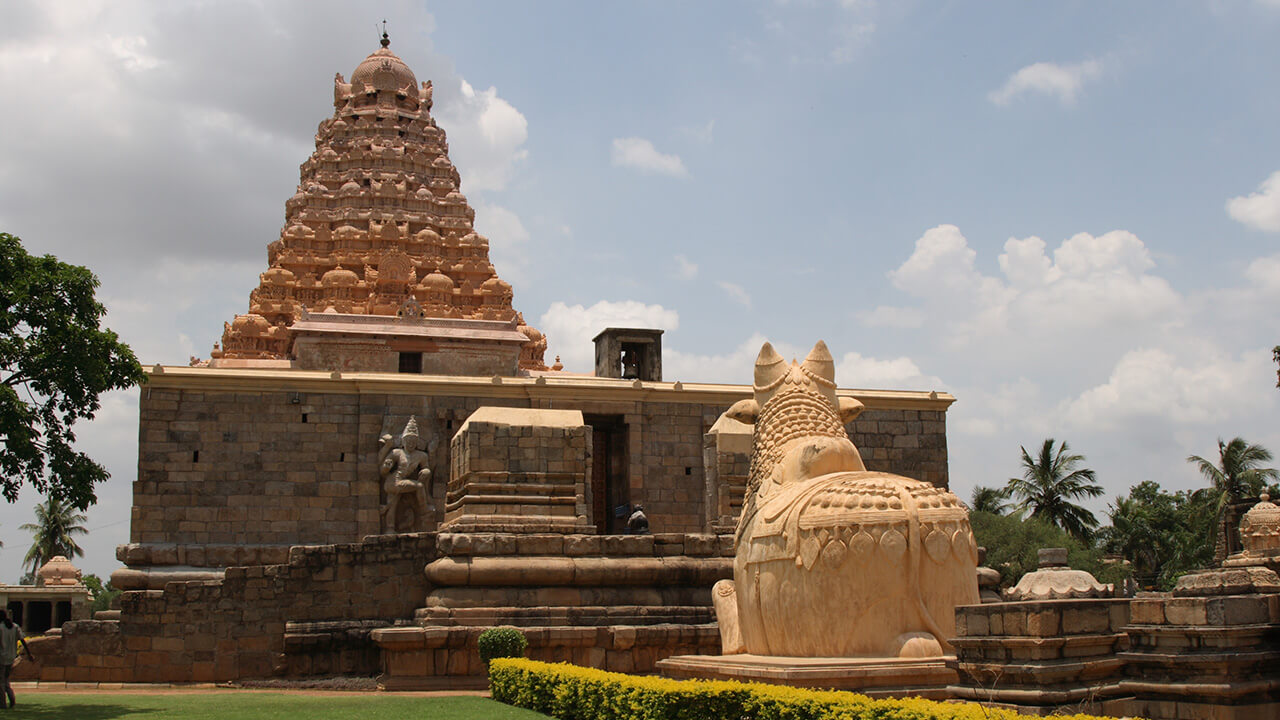
Located in the Ariyalur district of Tamil Nadu, the Gangaikonda Cholapuram temple stands as a magnificent testament to the architectural and artistic brilliance of the Chola dynasty. Commissioned by the Chola emperor Rajendra Chola I in the 11th century CE, this temple not only reflects the political might of the empire but also symbolizes the zenith of South Indian temple art.
The Rise of Gangaikonda Cholapuram
Rajendra Chola I, the son and successor of the great Rajaraja Chola I (the builder of the Brihadeeswara Temple in Thanjavur), built this temple around 1035 CE to commemorate his victorious campaign to the north, wherein he conquered territories up to the Ganga River. The city of Gangaikonda Cholapuram became the new capital of the Chola Empire, and the temple, dedicated to Lord Shiva, was its spiritual and architectural centerpiece.
Architectural Brilliance
The temple is a classic example of Dravidian architecture and follows many of the traditions established by its predecessor at Thanjavur. However, there are key stylistic differences that mark its uniqueness.
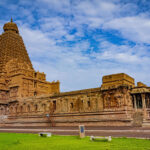
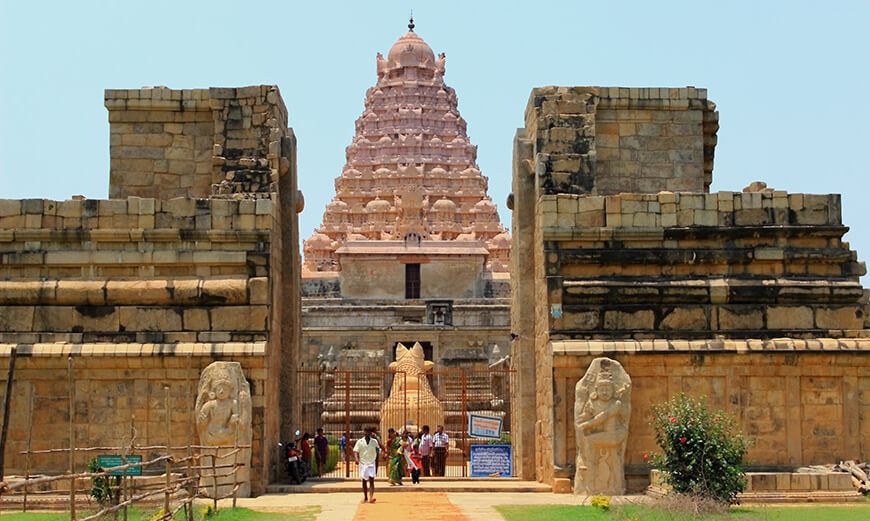
- Vimana (Tower): The vimana rises to a height of about 55 meters and is slightly shorter than that of the Brihadeeswara temple but more intricately sculpted. The curved profile gives the structure a sense of upward movement and grace.
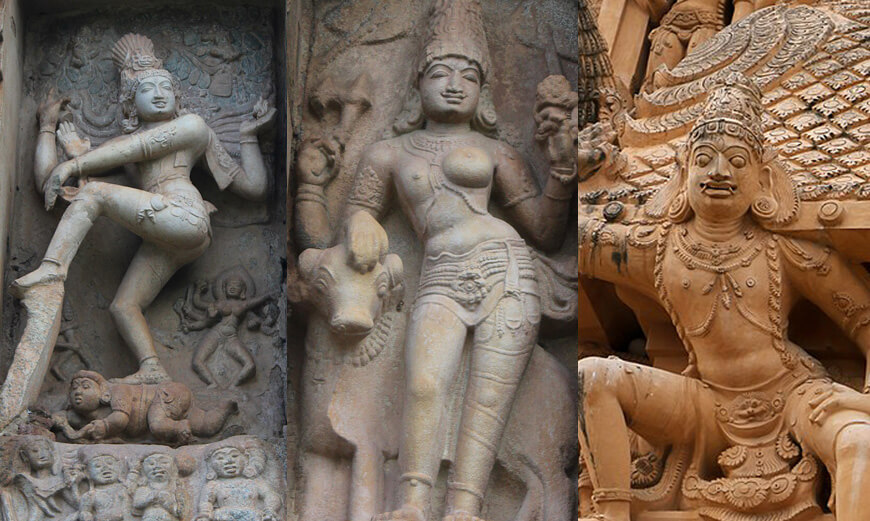
- Sculptural Excellence: The outer walls and niches house stunning stone sculptures of gods, goddesses, mythical creatures, and celestial beings. The depictions of Ardhanarishvara, Chandesanugrahamurti, and Nataraja are especially noteworthy.
- Massive Nandi: A colossal statue of Nandi, Shiva’s vahana (vehicle), sits majestically facing the sanctum, symbolizing unwavering devotion.
- Sanctum Sanctorum: The inner sanctum houses a massive Shiva lingam, said to be one of the largest in South India.
Symbolism and Spiritual Significance
The temple’s name, which translates to “The city of the Chola who brought the Ganga,” speaks volumes about the imperial vision of the Cholas. Rajendra Chola brought water from the Ganges and sanctified the temple’s well, symbolizing the unification of the north and south under one cultural umbrella.
More than just a place of worship, the temple was an assertion of political legitimacy and divine endorsement. It represents the synthesis of power, faith, and aesthetics—a temple that was both the abode of gods and the heart of an empire.
Art Historical Importance
Gangaikonda Cholapuram plays a pivotal role in the history of South Indian temple architecture. It marked a shift toward more refined proportions and elegant sculptural detailing compared to earlier, more austere structures. The temple’s carvings reflect the height of Chola craftsmanship, especially in how they depict movement, emotion, and divine narrative.
While less frequented than the Brihadeeswara temple, Gangaikonda Cholapuram is a crucial link in understanding the evolution of Dravidian art, Chola administration, and pan-Indian cultural integration through temple-building.
Legacy and Preservation
Although much of the original city has been lost over time, the temple remains remarkably intact. It is now maintained by the Archaeological Survey of India and is part of UNESCO’s list of tentative World Heritage Sites. It continues to be a source of pride and reverence for historians, pilgrims, and art lovers alike.
Conclusion
The Gangaikonda Cholapuram temple is not merely a monument of stone—it is a narrative carved in granite, telling stories of devotion, conquest, and artistic triumph. As we look back on the temple today, we find not just a relic of the past, but a living reminder of India’s rich and diverse cultural legacy.