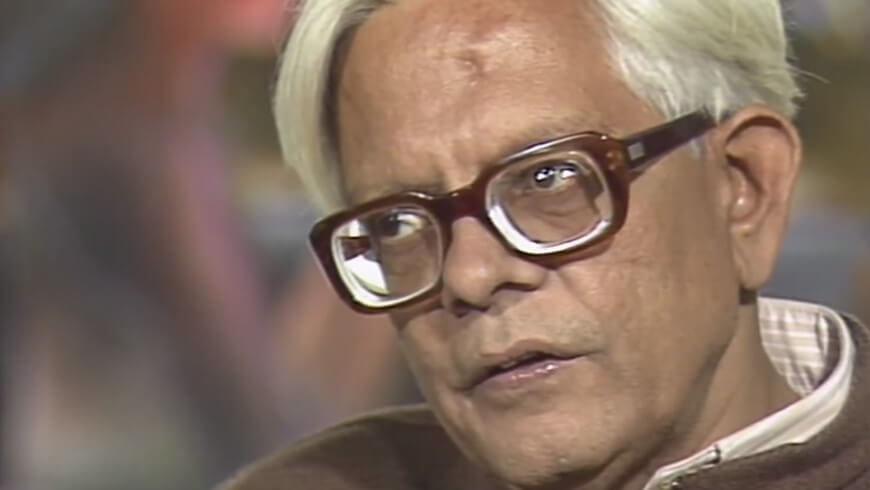
Bhupen Khakhar (1934–2003) is celebrated as one of the most original and courageous voices in Indian contemporary art. A self-trained painter who rose to prominence through sheer passion and determination, Khakhar’s work blended everyday stories, humor, intimacy, and social critique, giving Indian art a distinctly personal yet universal voice. His career not only pushed boundaries of style and subject matter but also opened new avenues of dialogue in Indian art history.
Early Life and Journey into Art
Born in Bombay (now Mumbai), Khakhar initially pursued a career in commerce and accounting before turning to art. His passion for creativity led him to study art criticism at the Faculty of Fine Arts, Maharaja Sayajirao University in Baroda, where he became part of a vibrant intellectual and artistic community known as the Baroda School. It was here that Khakhar began experimenting with painting, developing a language that fused narrative storytelling with modernist techniques.
The Storytelling Canvas
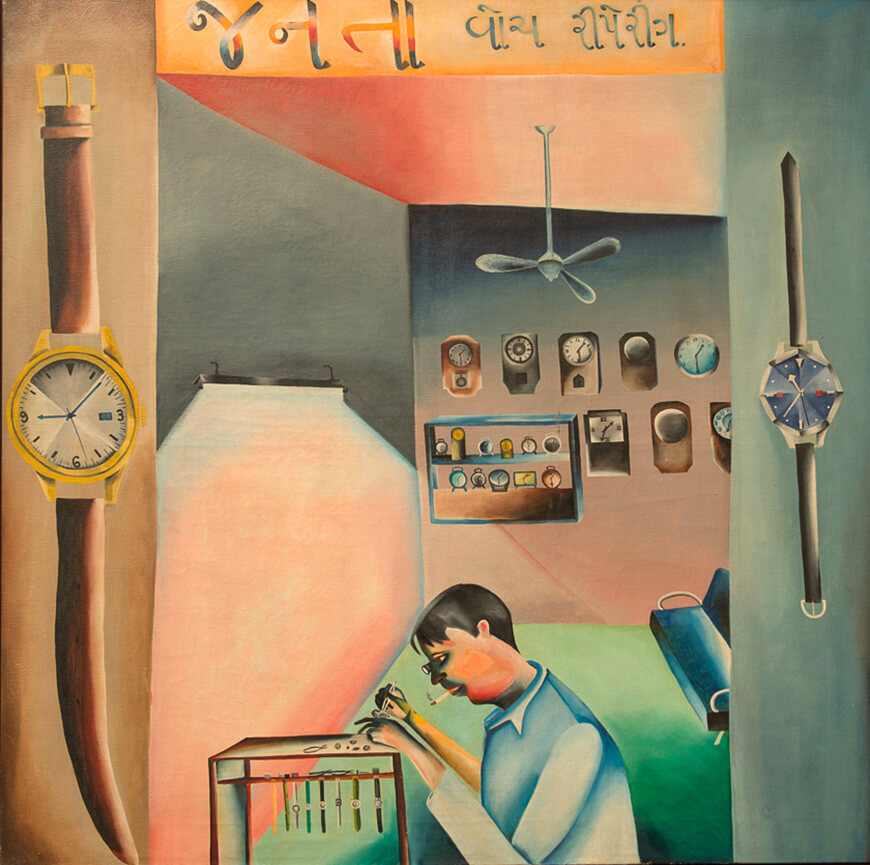
Khakhar’s works are often described as “visual stories.” Unlike the formal abstraction popular among many of his contemporaries, Khakhar painted scenes of ordinary life—tailors at work, barbers, watch repairmen, and the bustling neighborhoods of Indian towns. These seemingly simple depictions carried a deep sense of observation and empathy. By celebrating everyday people, Khakhar gave dignity to lives often ignored by high art.
His “Tradesmen” series in the 1970s is a classic example of this approach. The paintings of barbers, watch repairers, and shopkeepers are not just portraits of individuals but reflections of urban middle-class India, depicted with humor and affection.
Breaking Boundaries: Sexuality and the Personal
One of Khakhar’s most significant contributions to Indian contemporary art was his candid exploration of homosexuality, at a time when such subjects were rarely addressed in public discourse. In works such as Two Men in Benares (1982), Khakhar boldly depicted same-sex intimacy, breaking both social taboos and artistic conventions. His art became a site of confession, courage, and resistance, paving the way for discussions on sexuality and identity in Indian visual culture.
These works were not only autobiographical but also deeply political, questioning societal norms and challenging the invisibility of queer lives in India. In this sense, Khakhar was both an artist and an activist, using his canvases as spaces of visibility and acceptance.
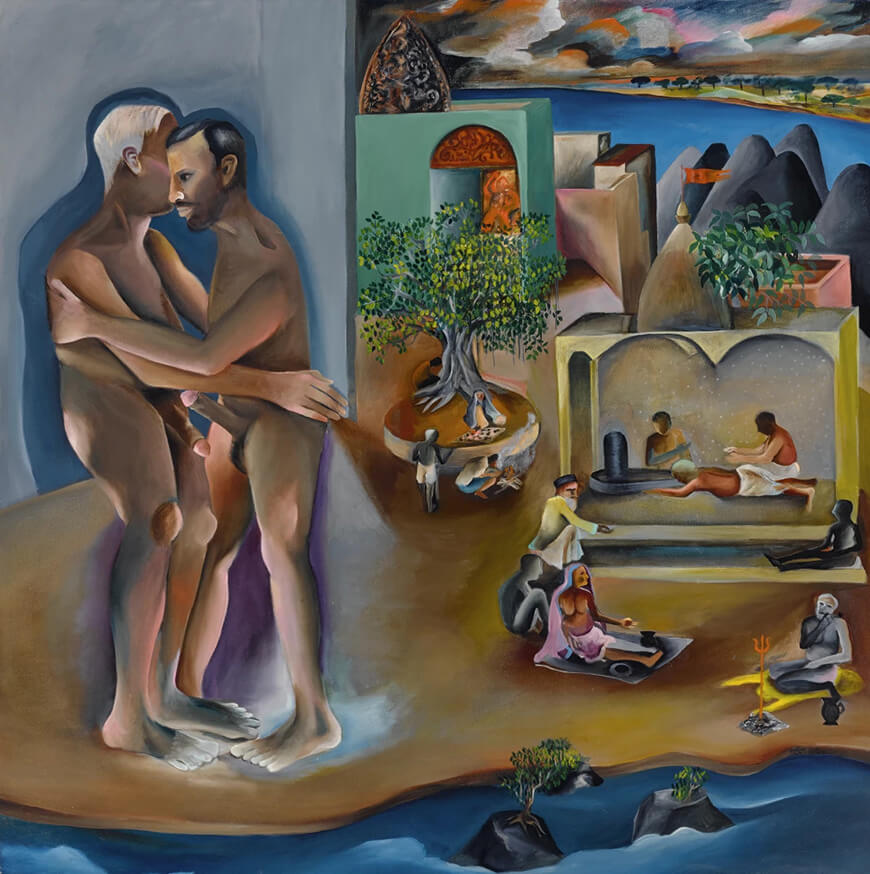
A Unique Artistic Language
Stylistically, Khakhar developed a distinct visual vocabulary. He drew inspiration from Indian folk art, calendar prints, and miniature painting traditions, combining them with modernist and narrative approaches. His paintings often had bright, flat colors, bold outlines, and a sense of playful exaggeration that made them immediately accessible.
Yet beneath the humor and color lay deep layers of meaning. Whether it was his satirical take on middle-class morality or his deeply personal meditations on desire and mortality, Khakhar’s art consistently offered a dialogue between the personal and the political.
Later Works and Global Recognition
In the 1990s and early 2000s, Khakhar’s art became more introspective as he dealt with themes of illness and mortality, especially after being diagnosed with cancer. Works such as You Can’t Please All (1981) and later self-portraits reveal an artist confronting the fragility of life with honesty and courage.
Khakhar’s reputation grew internationally, with exhibitions at the Tate Modern, the Venice Biennale, and major art museums across Europe and Asia. He became recognized not only as an Indian contemporary painter but as a global voice in modern art. His ability to weave together humor, vulnerability, and social critique earned him respect far beyond geographical boundaries.
Contribution to Indian Contemporary Art
- Personal Narratives in Art: Khakhar made the personal political, creating space for self-expression in Indian art.
- Representation of the Marginalized: He celebrated ordinary people and gave visibility to queer identities long before it was common in India.
- A Fusion of Styles: His blending of folk, popular, and modernist traditions helped shape a new Indian artistic vocabulary.
- Global Recognition: Khakhar placed Indian contemporary art on the international map, influencing future generations of artists and curators.
Legacy
Bhupen Khakhar’s legacy is not just about his paintings, but about his fearless honesty. He redefined what art could talk about in India—ordinary life, personal identity, sexuality, illness, humor, and mortality. In doing so, he expanded the boundaries of Indian contemporary art, leaving behind a body of work that continues to inspire scholars, artists, and viewers alike.
Today, Khakhar is remembered as a storyteller, a truth-teller, and above all, a painter who gave form and color to the complexities of human life. His canvases remain a living archive of courage and creativity.