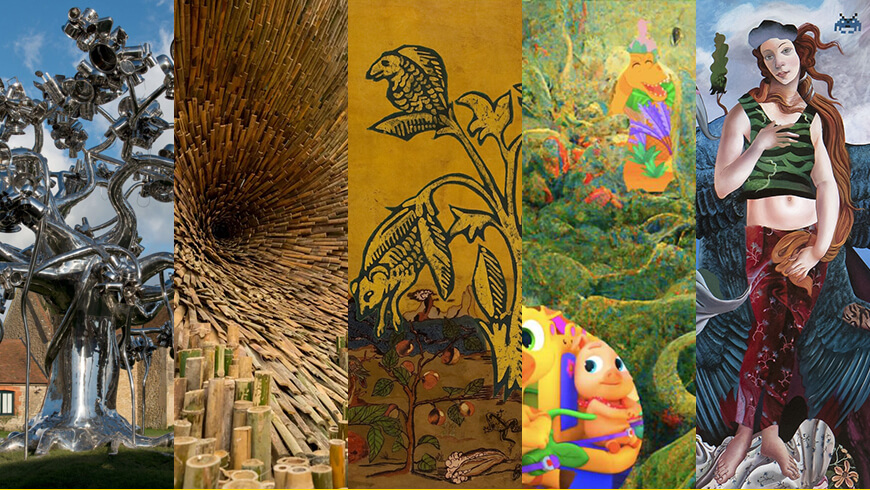
In the last three decades, contemporary Indian art has undergone a profound transformation—one that challenges not only how art looks, but what art is. Moving beyond painting and sculpture, today’s artists are redefining materiality through found objects, textiles, industrial waste, organic matter, digital tools, and artificial intelligence.
This shift signals more than experimentation; it reflects new ways of thinking about identity, ecology, memory, technology, and the socio-political environment. Material itself becomes a narrative force—alive, unstable, resistant, poetic.
India’s contemporary artists are part of a global conversation, yet their approaches are deeply embedded in local histories, craft traditions, and urban realities. This article explores how they reshape the meaning of the art object through unconventional materials and methods.
Found Objects: Everyday Materials as Carriers of Memory
The use of found objects in Indian art draws from histories of scarcity, migration, and urban transformation. Objects from daily life—doors, utensils, discarded furniture, metal scraps—carry memory, labor, and social history.
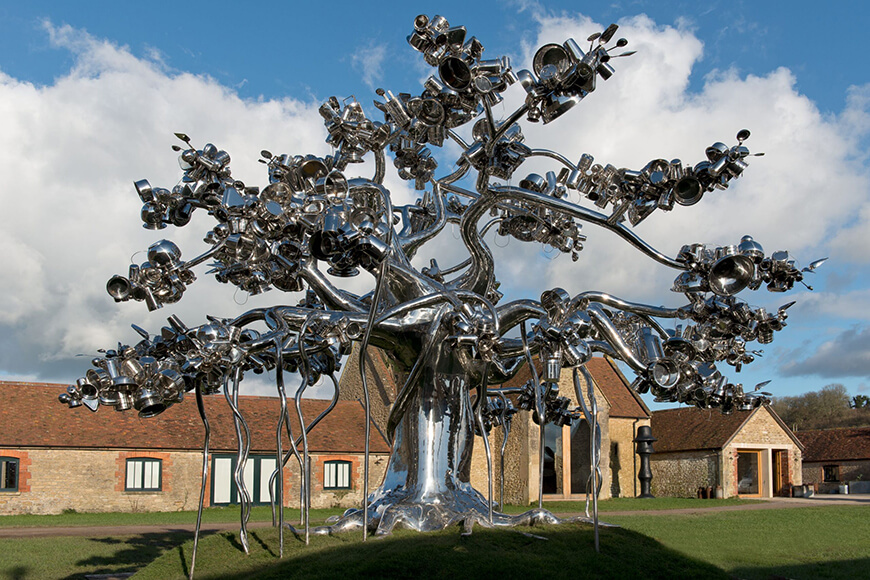
Subodh Gupta
Often called “India’s Damien Hirst,” Subodh Gupta uses tiffin boxes, stainless-steel utensils, and old furniture to construct monumental installations. These objects symbolize the Indian middle class, migration to cities, communal eating rituals, and the economy of aspiration.
Gigi Scaria
Scaria incorporates urban debris and architectural fragments to critique social inequality and rapid urban development. His material choices highlight the unstable boundaries between belonging and displacement.
Vivan Sundaram
Sundaram’s works using metal scraps, personal possessions, and family archives transform material into a political archive of memory, class, and identity.
Found objects, in these practices, are not passive; they speak. They recall forgotten labor, evoke nostalgia, and critique systems of power.
Textile and Fiber as Radical Tools
Textile has long been connected to Indian identity—from handloom traditions to Gandhian politics. Contemporary artists use fabric not merely as craft but as a radical sculptural medium.
Mithu Sen
She incorporates hair, cloth, and bodily materials to question consumer culture and female identity. Textile becomes a living, intimate extension of the body.
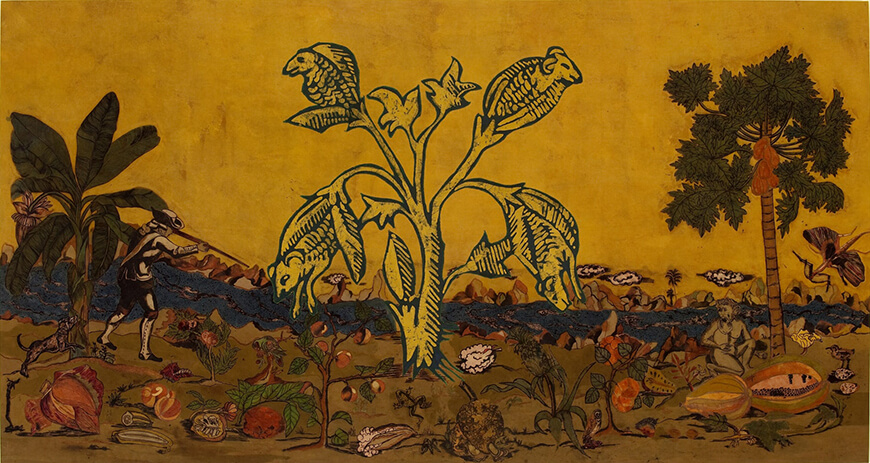
Lavanya Mani
Lavanya Mani’s dye-soaked textiles reference colonial botanical histories. Her material choices narrate the global trade routes of indigo, cotton, and spice.
Shelly Jyoti
She uses khadi and Ajrakh to discuss Gandhian philosophy, ecology, and sustainable futures.
In these works, textile is not soft or decorative—it is charged with resistance, labor, caste politics, and environmental history.
Industrial Waste & Eco-Materiality
One of the strongest movements in recent decades is the rise of ecological and sustainable material practices. These artists use scrap metal, discarded plastic, machine residue, demolished architecture, and industrial leftovers to comment on environmental crises and the violence of capitalism.
Sudarshan Shetty
Known for large installations built from industrial fragments, machinery, and architectural ruins. His mechanical objects become metaphors for the collapse of human relationships and urban life.
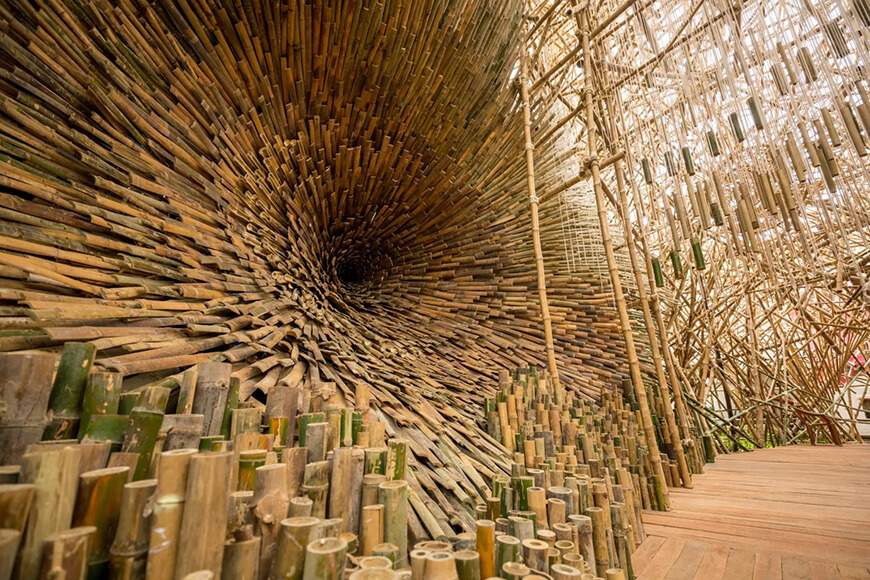
Asim Waqif
Working with bamboo, cables, demolition debris, and waste, Waqif creates immersive installations that respond to urban ecology and sustainability. His materials confront the viewer with the consequences of modern consumption.
Shanthamani M.
Her use of charcoal and burnt wood examines industrial pollution, memory, and environmental decay. Charcoal—both fragile and resilient—symbolizes destruction and renewal.
These materials carry a reminder: what society discards, art resurrects as moral witness.
Organic Matter: Material as Living Entity
Another movement in contemporary Indian art embraces the idea that materials are alive—changing, rotting, growing, or decomposing.
N. S. Harsha
His installations often incorporate soil, seeds, food grains, and natural fiber, transforming them into meditations on community and ecology.
Achia Anzi
Uses natural and biodegradable materials that reflect philosophical questions of impermanence and transformation.
Sheba Chhachhi
Her works include water, plants, light, and organic elements that evolve over time, creating an ecosystem rather than an object.
Organic matter allows artists to incorporate time, entropy, and growth into the artwork—making the sacred and the natural inseparable.
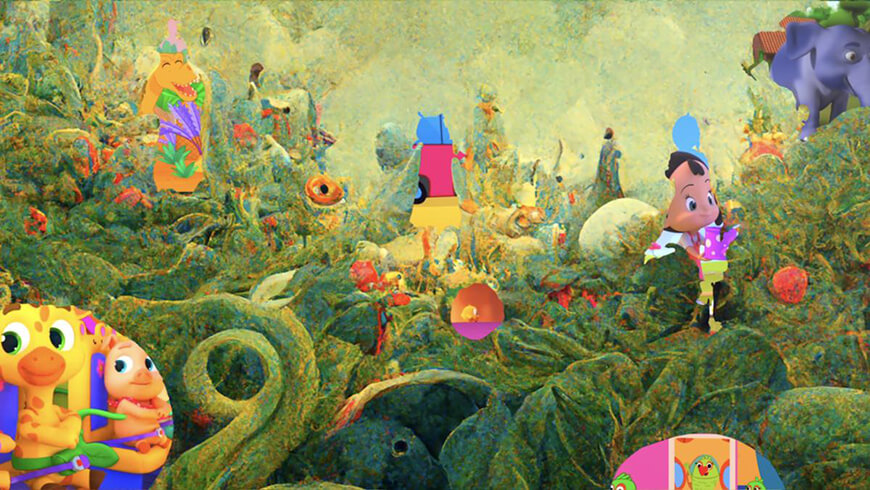
AI, Code, and Digital Tools: Expanding Material Beyond the Physical
The newest frontier in Indian contemporary art is algorithmic and digital materiality—where the “object” may be a moving image, a dataset, or a neural network.
Raghava KK
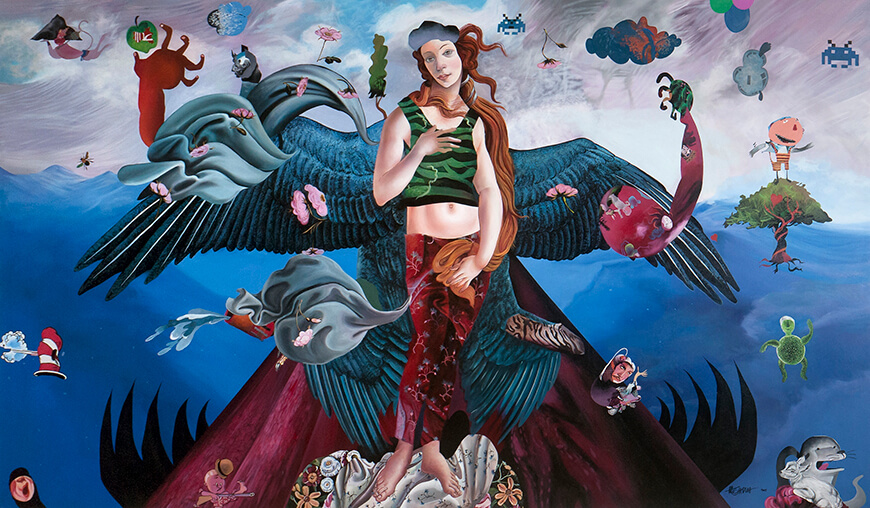
He uses AI to generate fluid, shape-shifting identities that explore race, gender, and personal narrative. For him, AI becomes a philosophical collaborator rather than a tool.
Harshit Agrawal (India’s first major “AI artist”)
Agrawal uses machine learning to create hybrid Indian forms drawing from classical sculpture, folk arts, and Mughal miniatures. His work questions authorship and the human-machine relationship.
Varun Desai, Aditya Pande, and Other New Media Practitioners
Through code, projection, AR, VR, and glitch aesthetics, these artists redefine what “material” can be in the digital age.
Digital and AI tools have allowed Indian art to move beyond the physical, entering conversations about future identity, surveillance, and the ethics of technology.
A New Definition of Materiality
Across these diverse practices, contemporary Indian artists share an expanded sense of materiality:
- Material is conceptual
- Material is political
- Material is embodied
- Material is ecological
- Material is digital and post-human
- Material is memory, history, and social critique
The contemporary Indian art landscape becomes not just a space of objects, but a complex field of relationships—between material and maker, society and waste, technology and identity, the organic and the artificial.