Contemporary art is more than a visual language—it is a response to the world we inhabit. It challenges convention, redefines mediums, and often blurs the boundaries between art and life. In India, contemporary art practice has grown into a complex, layered discourse that reflects the country’s social, political, and cultural shifts. From material experimentation to conceptual frameworks, contemporary Indian artists are creating narratives that speak to both local contexts and global conversations.
What is Contemporary Art Practice?
Contemporary art refers to the art of today—created by artists living in the 21st century. Unlike traditional or modern art movements that often followed specific styles or schools, contemporary art is characterized by its openness. It may include installation, video, performance, digital media, and even participatory forms. What unifies it is not how it looks, but what it questions.
In India, contemporary practice often intersects with postcolonial identity, consumer culture, urbanization, gender politics, and ecological concern. Artists are not only responding to aesthetics but to the lived reality around them.
Subodh Gupta: Everyday Objects as Cultural Symbols
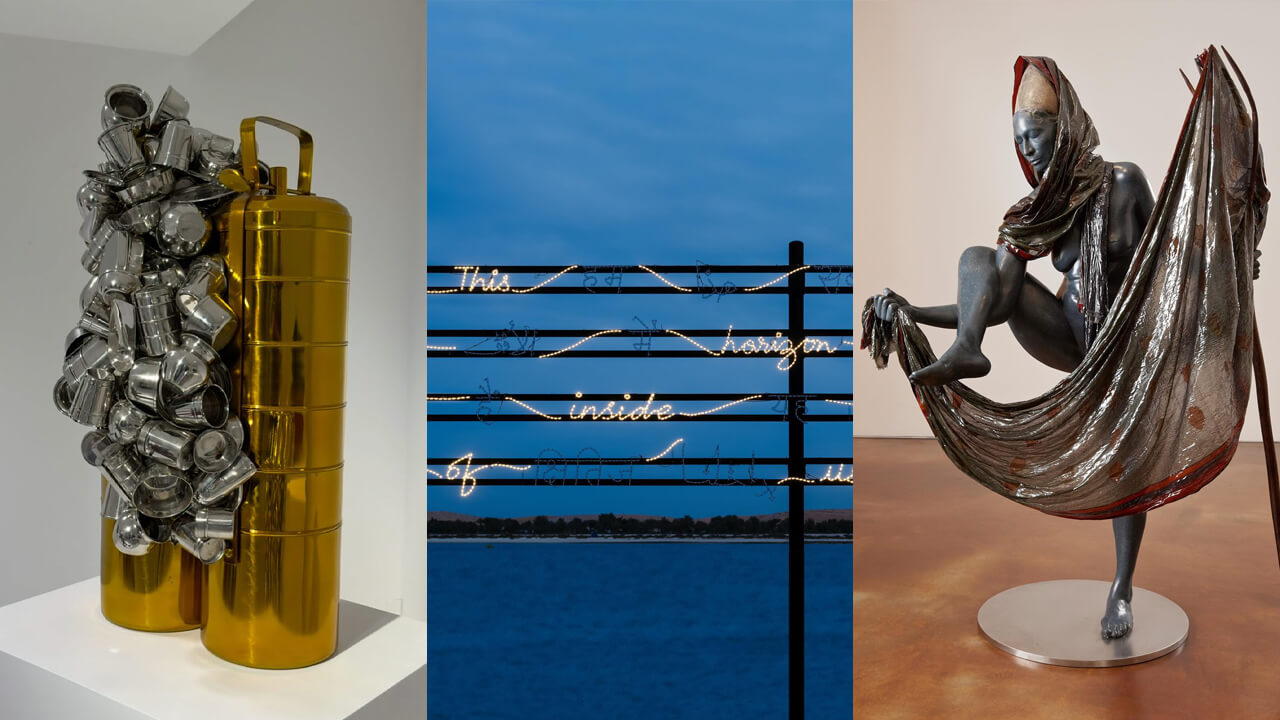
One of the most recognized faces of Indian contemporary art, Subodh Gupta is known for transforming ordinary objects—steel tiffin boxes, utensils, milk pails—into monumental sculptures. His works comment on migration, consumption, and the tension between tradition and modernity. In using familiar domestic items, Gupta links the global and local, creating pieces that resonate across cultures while deeply rooted in the Indian experience.
Bharti Kher: Identity, Body, and the Bindi
Bharti Kher explores themes of femininity, mythology, and cultural memory through a wide array of media. Her signature use of the bindi—a small decorative forehead dot traditionally worn by women—becomes a powerful motif in her work. Kher’s sculptures and installations interrogate gender identity, hybridity, and social conditioning. Her large-scale installations such as “The Skin Speaks a Language Not Its Own” (a life-sized elephant covered in bindis) blur the line between beauty and burden, tradition and transformation.
Shilpa Gupta: Borders, Voice, and Surveillance
Shilpa Gupta works with interactive installations, sound, text, and digital media to explore issues of power, identity, and surveillance. Her work often addresses the idea of borders—both physical and psychological. In her project “1:14.9”, she created a barbed wire installation that mimicked the Indo-Bangladesh border, highlighting its arbitrary violence. Gupta’s practice is rooted in activism, using art as a means to question systems and amplify marginalized voices.
How Contemporary Artists Redefine Practice
- Medium is fluid: Contemporary artists in India no longer confine themselves to painting or sculpture. They use photography, video, found objects, fabric, performance, and digital tools.
- Art is participatory: Many artists engage the audience directly—asking them to interact, reflect, and even co-create.
- Context matters: Artists are deeply concerned with their sociopolitical environment. Contemporary art often acts as commentary on caste, gender, environment, migration, or nationhood.
Emerging Voices in Indian Contemporary Art
The next generation of artists is also shaping contemporary practice. Vivan Sundaram had created installations that blend photography, found objects, and archival material. Rekha Rodwittiya and Nilima Sheikh continue to engage feminist discourse. Younger artists like Vatsala Ranjan, Sahej Rahal, and Raqs Media Collective are exploring new materialities and speculative futures through their work.
Conclusion
Contemporary art practice in India is not a singular voice, but a rich chorus. It weaves together personal narratives, public histories, and speculative futures. As the world becomes increasingly interconnected, the work of Indian contemporary artists continues to gain international recognition—not as exotic or “othered,” but as essential contributors to global cultural discourse. By interrogating structures, imagining alternatives, and offering aesthetic resistance, contemporary art remains a vital force of thought and transformation.
At Art33, we hope to chronicle this dynamic practice—its forms, its contradictions, and its continuous unfolding.