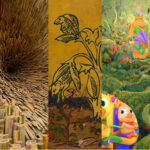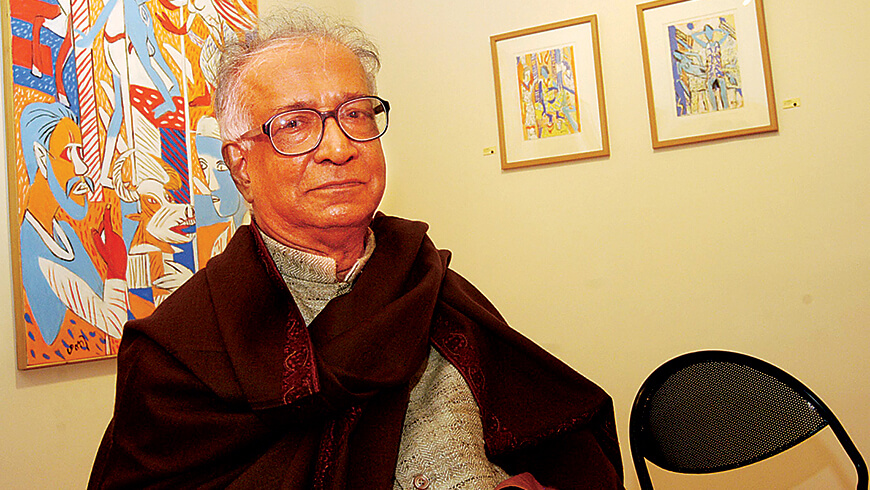
Kalpathi Ganpathi “K. G.” Subramanyan (1924-2016) was one of the seminal figures of Indian modern and contemporary art. His life and work spanned painting, print-making, mural work, pottery, toys, weaving, children’s books and pedagogy. What makes Subramanyan especially important is how he rooted his artistic practice in Indian folk, craft and vernacular traditions while engaging with international modernist ideas—creating a deep and expansive visual language that influenced generations of Indian artists.
Early Life and Education
Born in Kuthuparamba in north Kerala in 1924, Subramanyan came from a culturally rich milieu where music, ritual theatre and painted temple reliefs were part of his childhood environment. He studied economics at Presidency College, Chennai, but his turning point was moving to Kala Bhavana, Santiniketan where he trained under legendary figures such as Nandalal Bose, Benode Behari Mukherjee and Ramkinkar Baij. Later he was awarded a British Council Research Fellowship to study at the Slade School of Art in London (1955-56).
Artistic Practice: Mediums, Themes and Style
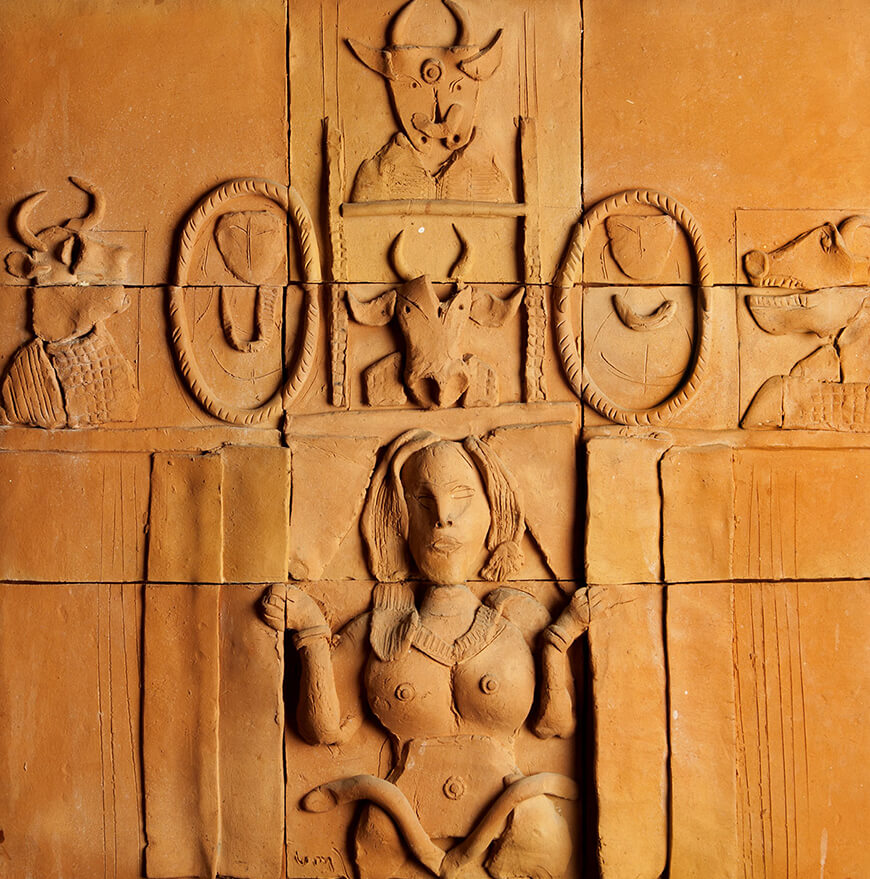
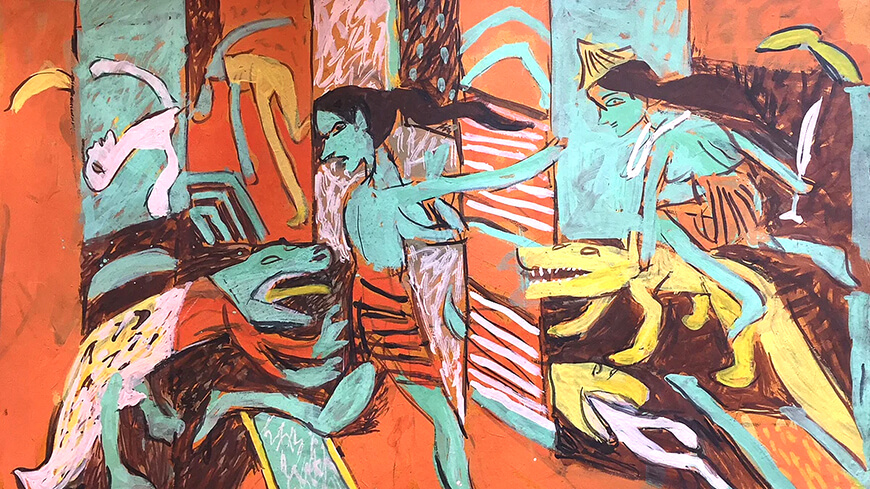
Subramanyan’s practice is remarkable for its versatility. He worked across mediums—oil painting, watercolour, printmaking (etching, silkscreen), glass reverse painting, terracotta, toys, weaving and murals. His colours often draw from Indian folk palettes; his iconography often comes from temple reliefs, Kalighat paintings, Pattachitra and everyday craft traditions.
Unlike strict modernist abstraction, his work always retained narrative, mythic and vernacular elements. One sees everyday figures, animals, pots, ritual scenes, children’s toys, and local temples depicted alongside playful geometry and modernist flattening of space. His art always asked: how can modern art remain rooted in local life?
Pedagogy and the Baroda Factotum
Subramanyan spent significant time teaching at the Faculty of Fine Arts, M. S. University, Baroda, a hub of post-Independence Indian art known as the Baroda School. His work there as teacher, mentor and innovator helped build one of India’s richest art ecosystems. He emphasized craft, context, material and dialogue over mere style. His students remember him as a storyteller, thinker, mentor.
Legacy and Recognition
Subramanyan’s impact was recognized by major honours: he received the Padma Shri in 1975, Padma Bhushan in 2006, and Padma Vibhushan in 2012. Institutions such as National Gallery of Modern Art, the Kiran Nadar Museum of Art and major auctions continue to highlight his work.
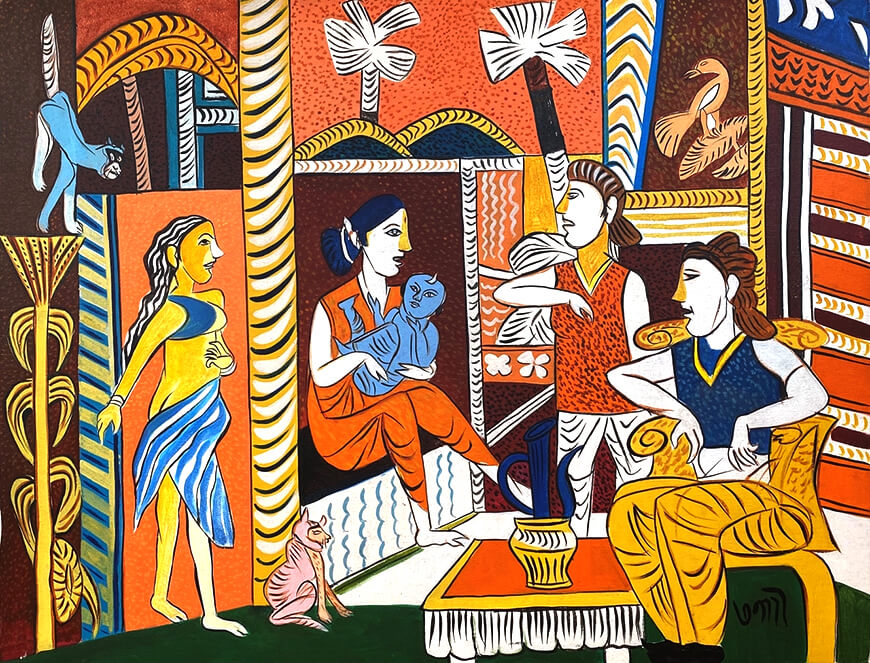
Themes of Social Engagement
More than formal concerns, Subramanyan’s work consistently engaged with social meaning. His early involvement in the Quit India movement and his lifelong interest in folk traditions are evidence of a deep sense of cultural rootedness. He believed that art should communicate, connect and reflect human life—not just aesthetic autonomy.
Selected Works and Illustrations
- His terracotta reliefs and outdoor murals (notably in Baroda) show his interest in integrating art with public space.
- His reverse glass paintings from the 1970s recall craft traditions while presenting abstracted narrative forms.
- His toy-making, illustration and children’s book art show his playfulness and belief in art as everyday life.
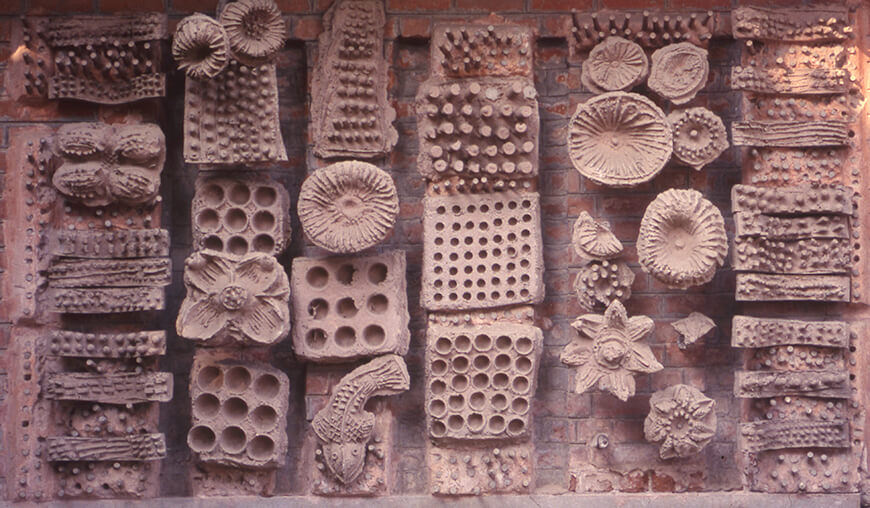
K. G. Subramanyan stands as a bridge: between folk and modern, craft and theory, local and global. His art invites us to rethink Indian modernism not as imitation of the West, but as a rooted, selective, hybrid response. As Indian art moves into the 21st century, his legacy remains vital—teaching us that creativity thrives in connection: to place, craft, community and story.