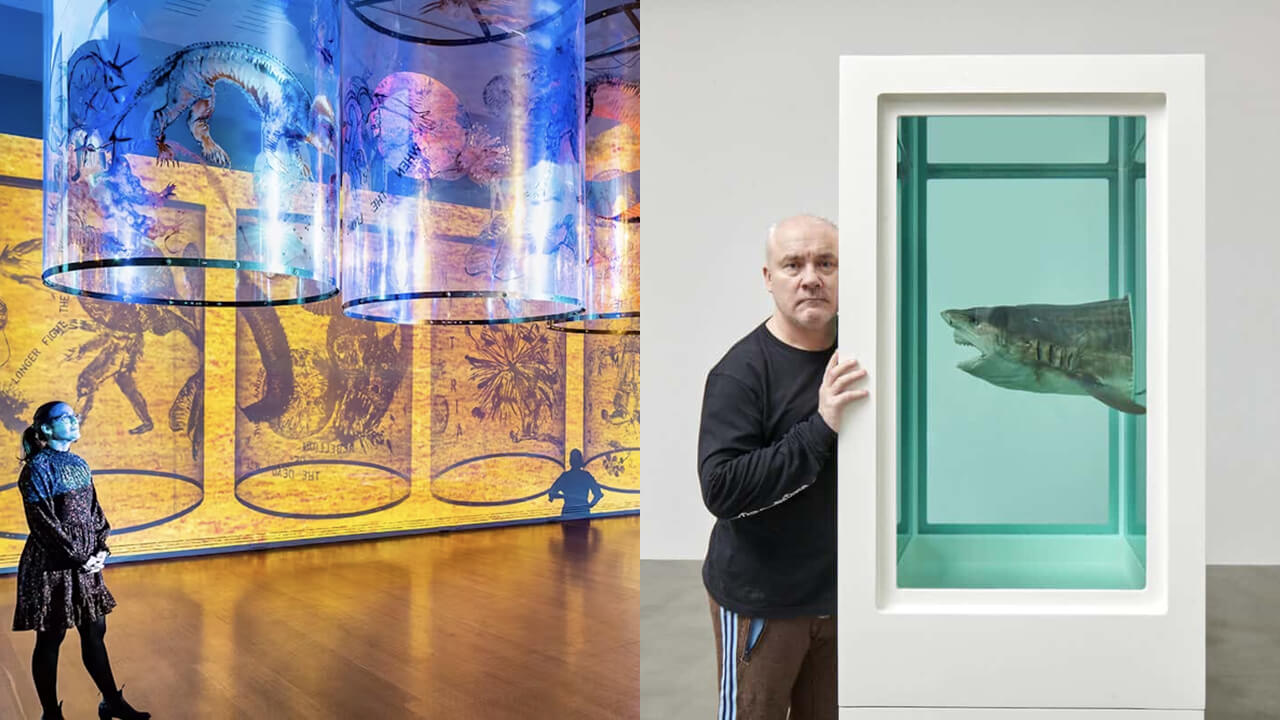
The world of contemporary art is multifaceted and ever-evolving, encompassing a range of artistic expressions that respond to shifting cultural, political, and technological realities. In this broad terrain, Indian contemporary art occupies a unique position—intertwining tradition, spiritual aesthetics, regional memory, and socio-political commentary. To understand the depth and character of Indian contemporary art, it is valuable to situate it within a comparative framework alongside Western contemporary art, which has long dominated critical discourse and institutional spaces. This article explores the discursive formations of contemporary art in India in contrast with Western practices, while highlighting key artists, historical developments, and aesthetic divergences.
Historical and Philosophical Roots
Contemporary art in the West is often linked to post-World War II developments, where modernism gave way to conceptualism, minimalism, and eventually postmodern critiques of authorship, originality, and medium. It evolved in tandem with industrial capitalism, secularism, and modernity, with institutions like the Museum of Modern Art and the Venice Biennale shaping its narratives. Western art increasingly leaned toward the cerebral and the conceptual, often distancing itself from traditional craft or regional specificity.
In contrast, Indian contemporary art developed within the crucible of post-independence nation-building, cultural self-definition, and the trauma of colonialism and Partition. The early years after 1947 saw Indian artists grappling with questions of identity, authenticity, and belonging. The Progressive Artists’ Group (PAG), formed in 1947, was pivotal in establishing a modernist idiom that was neither wholly Western nor traditionally Indian. Artists like M.F. Husain, F.N. Souza, and S.H. Raza forged new vocabularies by drawing on indigenous symbols, mythology, and folk traditions, even as they engaged with global modernist aesthetics.
Narrative vs. Conceptual Imperatives
One of the most prominent distinctions between Indian and Western contemporary art lies in the role of narrative. While Western contemporary art in the 20th century often favored abstraction and conceptual inquiry, Indian artists continued to incorporate narrative elements deeply embedded in history, mythology, and lived experience.
For example, artists like Gulammohammed Sheikh and Nalini Malani use layered narratives, textual references, and figurative imagery to explore memory, displacement, and political violence. Their work resists the purely formal or conceptual tendencies seen in much of Western art. Even contemporary practitioners like Pushpamala N employ satire and performative re-enactments of historical and popular imagery to comment on gender, nationalism, and cultural production.
This narrative impulse is not merely illustrative; it serves as a vehicle for critique, continuity, and cultural specificity. It situates Indian art in a broader socio-political matrix that is often absent in Western minimalist or purely formalist works.
Materiality and Craft Traditions
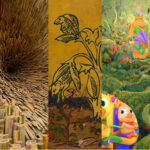
Indian contemporary art retains a deep engagement with materiality, often drawing from local craft traditions and regional artisanal knowledge. Artists like Jitish Kallat, Sheela Gowda, and G.R. Iranna use unconventional materials—ranging from cow dung, incense ash, and discarded textiles to auto parts and building debris—to comment on consumerism, spirituality, labor, and transience.
This relationship with materials can be seen as a response to, and a divergence from, the industrial materials and polished surfaces characteristic of much Western conceptual and minimalist art. Where Donald Judd may have privileged industrial production, Indian artists often embed their work in the tactile, the ephemeral, and the handmade.
The Role of Institutions and Infrastructure
Western contemporary art has long benefited from a robust network of institutions, collectors, critics, and biennales. Art schools like the Bauhaus, Yale, or Goldsmiths; museums like MoMA or Tate; and publications like Artforum have helped shape and globalize Western art discourse.
In India, the infrastructure is still emerging. While cities like Baroda, Delhi, and Mumbai have active art scenes, the ecosystem for contemporary art has historically been fragmented. Nonetheless, spaces like the KHOJ International Artists’ Association, the Kochi-Muziris Biennale, and the Faculty of Fine Arts in Baroda have played critical roles in nurturing experimental practices and critical dialogue.
Moreover, the Indian art market and its visibility on global platforms have expanded in the last two decades. However, this visibility often necessitates translating culturally rooted works for Western audiences—a process that risks oversimplification but also enables cross-cultural dialogue.
Globalization and the Blurring of Boundaries
In recent years, the distinctions between Indian and Western contemporary art have begun to blur. Artists from India are increasingly part of international exhibitions, residencies, and academic programs. Conversely, Western artists are engaging more deeply with postcolonial, ecological, and indigenous narratives.
Yet, Indian contemporary art remains rooted in a different temporal and cultural rhythm. It addresses issues like caste, rural-urban migration, religious pluralism, and linguistic diversity in ways that resist homogenization. Artists like Shilpa Gupta, Archana Hande, and Amar Kanwar exemplify this dynamic, using new media, sound, and film to expand the scope of contemporary practice while staying grounded in context.
Conclusion
Indian contemporary art is not merely a regional response to global trends; it is a discursive field in its own right—steeped in history, locality, and the politics of representation. While Western contemporary art may dominate market metrics and institutional visibility, Indian art contributes meaningfully to global conversations around identity, belonging, and social transformation.
As Indian artists continue to navigate and shape the global art ecosystem, they do so with a critical awareness of their histories, an openness to experimentation, and a commitment to sustaining dialogue across borders. In doing so, they affirm that contemporary art is not a monologue but a conversation—rich with difference, nuance, and possibility.