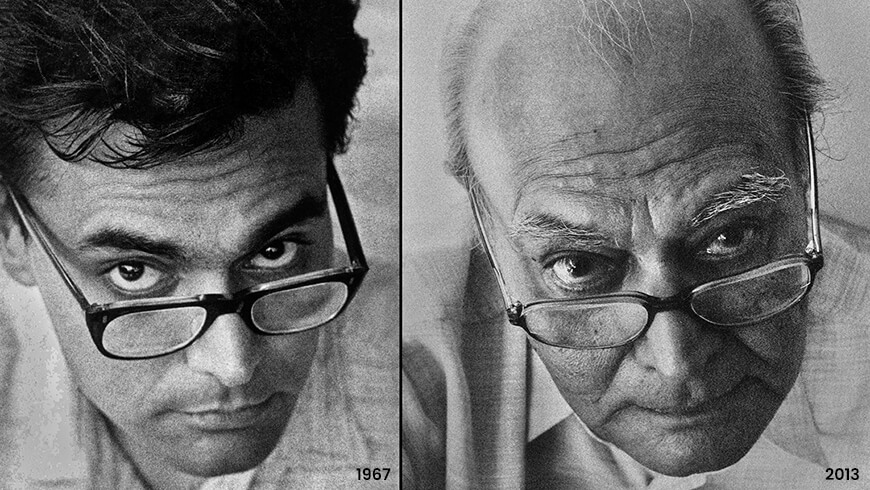
Jyoti Bhatt (b. 1934) stands as one of the most significant figures in modern and contemporary Indian art. An artist, printmaker, and photographer, his career spans over six decades, weaving together painting, printmaking, and visual documentation. His contribution to Indian art is not only through his creative practice but also through his relentless efforts to preserve and archive the visual culture of rural India.
From the classrooms of the Faculty of Fine Arts, M.S. University, Baroda, to rural villages across Gujarat and beyond, Bhatt’s journey demonstrates a unique blend of modernist inquiry, deep respect for tradition, and a commitment to recording the everyday lives of ordinary people.
Early Life and Training
Jyoti Bhatt studied painting at the Faculty of Fine Arts, Baroda, where he was shaped by the influence of mentors like K.G. Subramanyan and N.S. Bendre. Later, he pursued studies in fresco and mural painting in Italy and printmaking in the United States. These exposures enriched his vocabulary, allowing him to integrate international modernist techniques with a deep engagement in Indian aesthetics.
The Printmaker’s Language
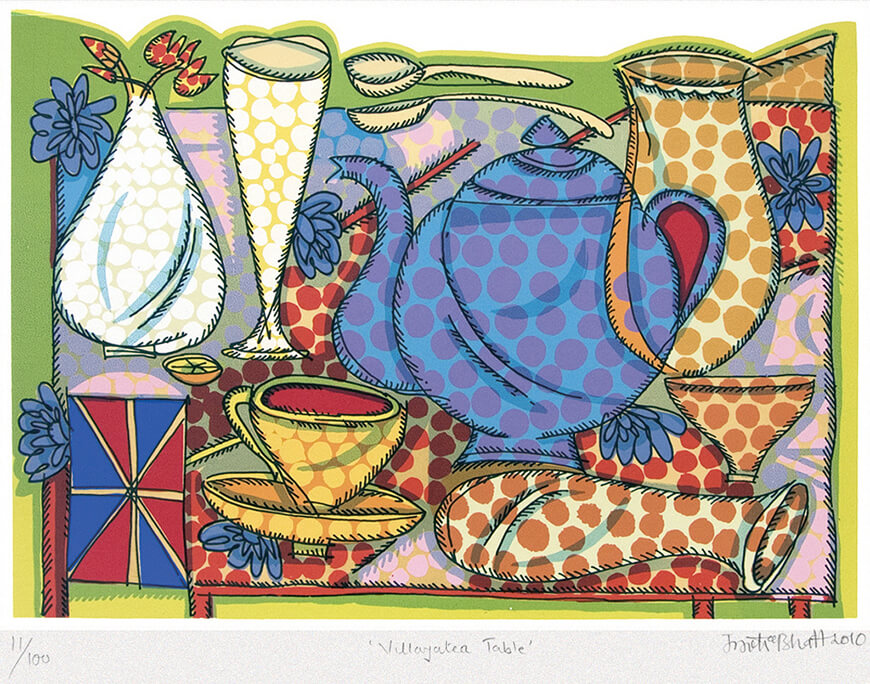
Bhatt is celebrated as one of India’s leading printmakers. His experiments in intaglio, etching, and serigraphy helped elevate printmaking as a serious medium of fine art in India during the 1960s and 70s. Unlike painting, printmaking allowed for multiple reproductions, and Bhatt used this potential to spread his imagery to wider audiences.
His works often feature motifs from folk traditions—animals, rituals, mythological figures—rendered with bold lines and vibrant colors. By blending traditional symbols with modernist abstraction, Bhatt created a new visual language that was uniquely Indian yet globally resonant.
Photography as Archive
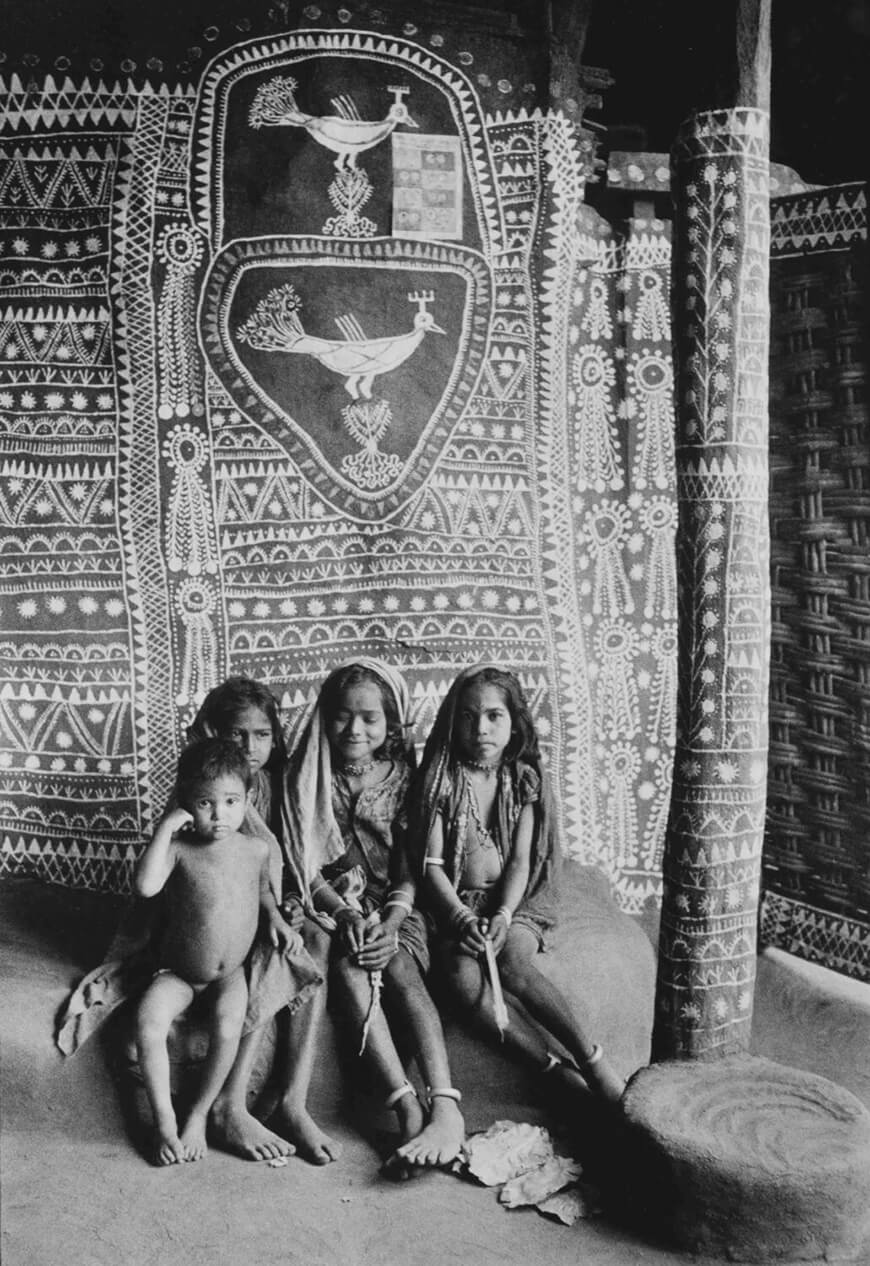
Perhaps Bhatt’s most enduring legacy lies in his photographic documentation of folk art and culture in India. Beginning in the 1960s, he travelled across rural Gujarat, Rajasthan, Madhya Pradesh, and other regions, capturing wall paintings, rangoli patterns, rituals, masks, and everyday life.
These photographs are more than just ethnographic records—they are works of art in themselves, celebrating the creativity of communities often overlooked in mainstream art history. Through this documentation, Bhatt preserved invaluable traditions that were at risk of disappearing due to urbanization and modernization.
Today, his photographs are housed in major collections, including the Indira Gandhi National Centre for the Arts (IGNCA) and the Asia Society, New York. They continue to serve as a vital resource for scholars, artists, and cultural historians.
Themes in Jyoti Bhatt’s Work
- Folk Influence: His prints often integrate motifs like elephants, trees, and symbolic forms found in village art.
- Everyday Life: Whether through photography or print, Bhatt found beauty in the ordinary—rituals, homes, festivals, and personal spaces.
- Tradition and Modernity: His works balance the tension between preserving cultural heritage and engaging with modernist expression.
Recognition and Legacy
Jyoti Bhatt has received numerous awards, including the Kala Ratna from the All India Fine Arts and Crafts Society and the Padma Shri in 2019. His work has been exhibited globally and is held in major collections, from the National Gallery of Modern Art (NGMA), New Delhi, to the Museum of Modern Art (MoMA), New York.
More importantly, Bhatt’s influence extends beyond his individual works. Generations of students at MSU Baroda were inspired by his teaching, while his photographs remain a cornerstone in the study of Indian folk traditions.
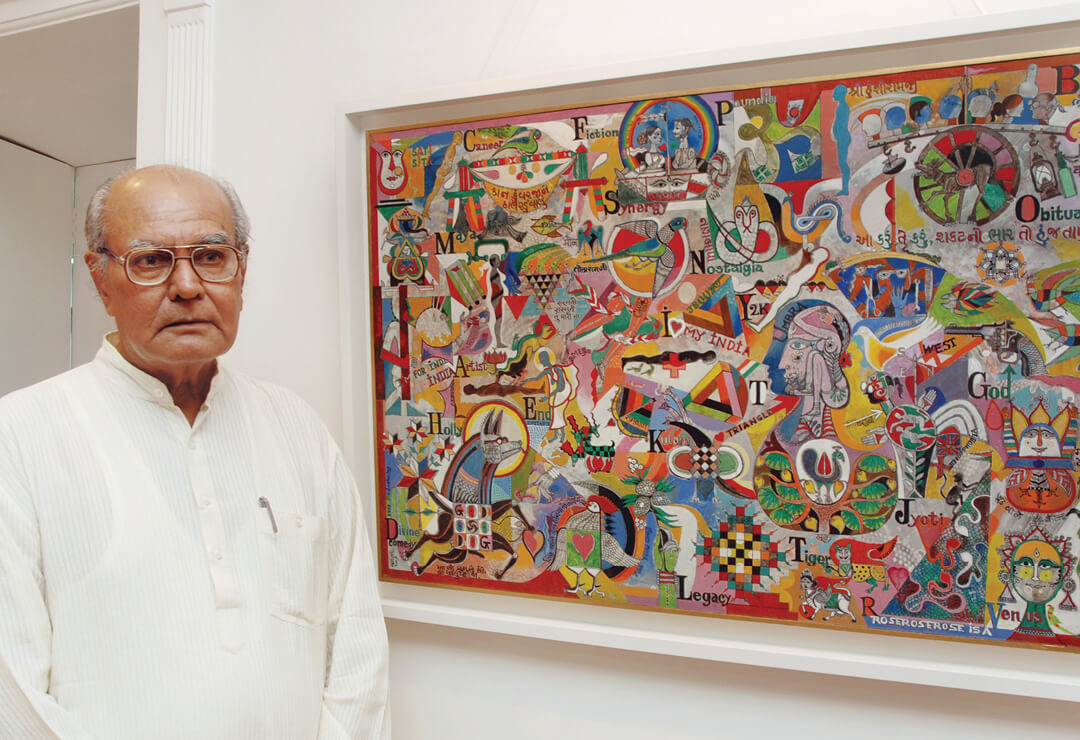
Jyoti Bhatt embodies the role of an artist as both creator and chronicler. His practice bridges art and anthropology, tradition and modernity, the local and the global. In doing so, he ensured that Indian visual traditions found a respected place in contemporary discourse.
His legacy reminds us that art is not only about individual expression but also about preserving collective memory. As India continues to negotiate its place in a rapidly changing world, Bhatt’s works remain a testament to the power of art to document, celebrate, and transform.