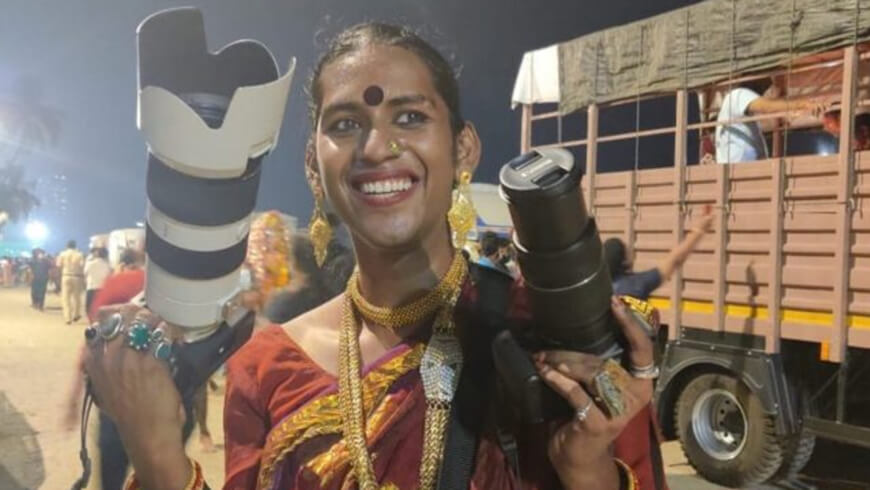
Photography has always been more than a craft. It is a way of seeing, of witnessing, of narrating stories that often remain on the margins. In contemporary India, few photographers embody this spirit as powerfully as Zoya Thomas Lobo, the country’s first transgender photojournalist. Her journey is not simply about breaking into a profession historically dominated by men, but about reclaiming visibility, dignity, and agency through the act of looking and recording.
Zoya’s lens does not just capture images; it captures lives, struggles, and humanity. Her story is a testament to resilience, the transformative power of art, and the insistence on truth.
Breaking Barriers: A Journey Begins
Born and raised in Mumbai, Zoya grew up amidst the complex textures of the city—its contrasts of wealth and poverty, its communities of resilience, and its undercurrents of exclusion. From a young age, she faced the challenges of being transgender in a society still negotiating its relationship with gender identity.
Her early life was marked by rejection and struggle. Yet Zoya found in photography not only a passion but also a language through which she could assert her presence in the world. She trained her eyes on the realities around her, understanding that the act of documenting could be an act of resistance.
First Steps into Photojournalism
Photojournalism in India is a demanding profession. It requires persistence, courage, and often physical risk. For Zoya, the challenges were compounded by prejudice against her gender identity. She often had to fight for assignments and recognition, encountering both skepticism and exclusion.
Despite this, her determination never faltered. She began working with newspapers, agencies, and independent outlets, gradually establishing herself through stories that resonated with both sensitivity and strength. Her photographs reflect a sharp awareness of detail: the gestures of people, the pulse of streets, the mood of gatherings.
Themes in Her Work
Zoya’s work revolves around the lives of marginalized communities, disasters, protests, and ordinary human stories. Through her lens, she insists that no one remains invisible.
- Marginalized Voices: Her photographs often highlight the transgender community and other underrepresented groups, bringing dignity to their stories.
- Documenting Reality: From floods in Maharashtra to political rallies and local festivals, her camera records the unfolding narratives of everyday life.
- Human Resilience: There is a quiet strength in her photographs, reminding viewers that survival, love, and hope are as central as suffering.
Recognition and Visibility
As India’s first openly transgender photojournalist, Zoya has received national and international recognition. Her work has been featured in major publications, and she has spoken widely about her journey—bridging the worlds of activism and art.
Beyond awards and media attention, her most significant contribution lies in the visibility she brings. Every frame she captures is a reminder that transgender voices belong in every sphere of Indian society, including the world of journalism and art.
The Artist as Witness
For art historians and critics, Zoya’s photographs invite reflection on the role of the artist as a witness. In her work, the boundaries between journalism and art blur. Her images are factual, but they are also poetic. They tell us what happened, but also how it feels to be human in those moments.
Like many great documentary photographers before her, Zoya insists on the truth of lived experience. Her photographs are not neutral—they are empathetic, urgent, and deeply personal.
Legacy and Future Directions
Zoya Thomas Lobo’s journey is still unfolding. As she continues to document stories across India, she paves the way for future generations of transgender artists and journalists. She challenges institutions to be more inclusive, and society to recognize the talent and courage within marginalized communities.
Her journey also expands the narrative of Indian contemporary art and journalism. By combining personal identity with professional commitment, she shows us that the camera is not just a tool—it is a bridge, a voice, and a mirror.
Zoya Thomas Lobo’s story is one of defiance, resilience, and creativity. From facing rejection to becoming a voice for those often unheard, she embodies the transformative power of photography. In documenting lives, she rewrites her own, reminding us that art can be an act of survival and a pathway to freedom.
Her lens is more than a witness—it is an invitation to see differently, to empathize, and to change.